The Brakes Are Squealing — Do the Brake Pads Need Replacing?
Five Signs Drivers Can Recognize Themselves — and the Point Beyond Which Waiting Works Against You
AutoKonekt · Driver’s Guide · Category: Auto Repair Shops
Brake pads are wear items. They begin wearing from the very first mile, every single day, completely out of sight — hidden behind the wheel and inside the brake caliper, with almost nothing during normal driving to suggest that they are approaching the end of their service life. That is why most drivers only notice them once they start making noise.
The problem is that by the time the noise appears, wear is already at an advanced stage. And if that warning is ignored as well, the brake disc is next — and the repair bill can quickly double.
The good news is that you do not need to be a mechanic to understand where you stand. There are five signs, and you can check each of them yourself, either without tools or with tools you probably already have.
Short Answer
A new brake pad typically has 10 to 12 mm of friction material, excluding the metal backing plate. Once the thickness drops to around 3 mm, it is time for replacement — do not wait until it reaches 2 mm.
Everything else in this article is simply a way to estimate where you stand if you are unable to measure the pads directly.
1. Friction Material Thickness — the Only Direct Measurement
Everything else is an indirect sign. This is the only direct measurement.
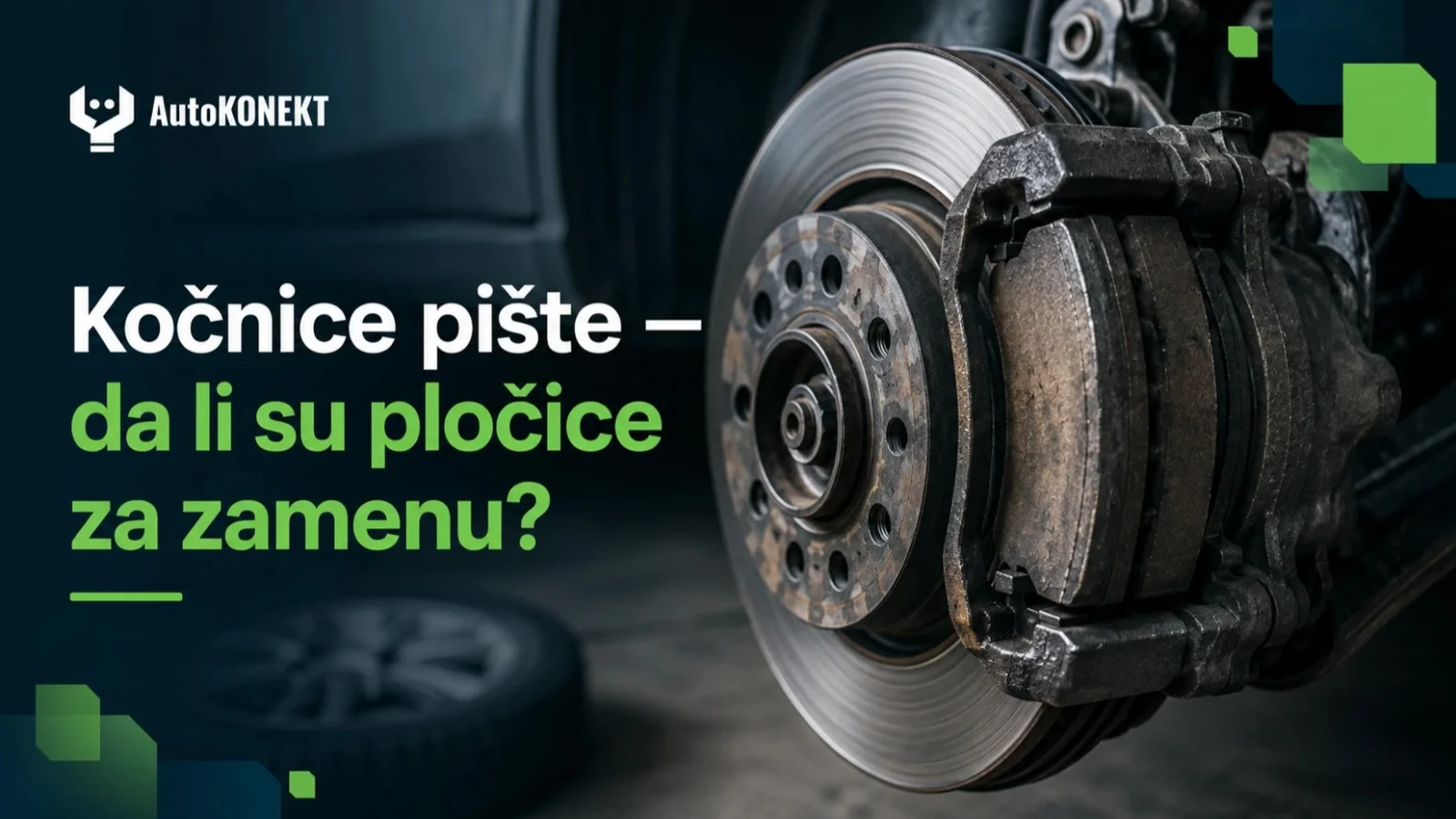
On most vehicles, the brake pad can be seen through the openings in the wheel. It sits against the brake disc, and what you are measuring is the grey friction material — not the metal backing plate it is bonded to.
With wheels that have narrow openings, or vehicles fitted with wheel covers, the wheel may need to be removed. At that point, it is usually easier to leave the inspection to a repair shop.
10–12 mm — new brake pad (rear pads are often slightly thinner, around 8–10 mm)
6–9 mm — everything is fine; there is no reason for concern
4–5 mm — attention zone: schedule an inspection, but there is no need to panic
around 3 mm — it is time for replacement; do not wait until the pad reaches 2 mm
below 2 mm — you are very close to the metal backing plate, and driving in this condition can damage the brake disc
Always inspect the inner brake pad as well, not just the outer one. The inner pad can wear faster and is harder to see — which is exactly why it is often the source of unpleasant surprises.
2. Noise: Squealing Is a Warning, Grinding Means There Is Already a Problem
These two sounds are not the same and do not mean the same thing.
A high-pitched squealing sound during braking often comes from the mechanical wear indicator — a small metal tab designed to contact the brake disc once the friction material has worn down to a critical level.
That is not a malfunction. It is the system doing exactly what it was designed to do: warning you while there is still time to act.
A harsh metallic grinding sound is the next stage. At that point, the friction material may already be gone and the metal backing plate of the brake pad may be grinding directly against the brake disc.
The disc is then likely to be damaged and must be inspected. Whether it needs to be replaced depends on its condition and measured thickness, compared with the minimum permissible thickness specified by the manufacturer and marked on the disc as MIN TH.
Driving in this condition can significantly increase stopping distance.
There is one exception worth knowing about: brief squealing during the first few braking events in the morning, particularly after a rainy or foggy night, is often caused by a thin layer of surface rust on the brake disc. The pads usually remove it within a few braking applications.
If the noise disappears and does not return during the drive, it is probably not related to pad wear.
3. Brake Fluid Level Gradually Dropping
This is a sign that few drivers associate with brake pad wear, but it is worth understanding.
As the friction material wears down, the pistons inside the brake calipers move farther outward to compensate for the increased gap.
The additional space created inside the caliper is filled with brake fluid from the reservoir under the hood. As a result, the fluid level in the reservoir may gradually decrease even though not a single drop has leaked from the system.
So, a gradual reduction in brake fluid level may accompany brake pad and disc wear. However, any unusual drop in fluid level should be investigated because the same symptom can also indicate a problem within the braking system itself.
A sudden drop in brake fluid level always requires immediate inspection.
Never simply top up the brake fluid to “correct” the level before identifying the cause.
Doing so can remove an important warning sign. And if the lower level was caused by worn brake pads, the reservoir may overflow once new pads are installed and the caliper pistons are pushed back into position.
4. Longer Stopping Distance and a Softer Brake Pedal
This is one of the most deceptive signs because the change happens gradually — so gradually that the driver may adapt to it without noticing.
More specifically, you may find that you need to press the brake pedal harder to achieve the same braking effect, the car takes longer to stop than you expect, or the vehicle pulls slightly to one side under braking.
Pulling to one side can indicate that the pads on the left and right wheels are not wearing evenly, which may point to a sticking brake caliper.
If you are unsure whether you are imagining the difference, pay attention to how the car brakes from the same speed on a section of road you drive regularly.
Comparing the vehicle’s current behaviour with what you are used to can be more useful than relying on a vague impression.
5. Warning Light on the Dashboard
Some vehicles are equipped with an electronic brake pad wear sensor — typically a wire integrated into the friction material that triggers a warning on the instrument panel once the pad wears down to a certain level.
There are two important things to know.
First, not all vehicles have this feature. On many cars, brake pad wear can only be identified visually.
Second, even on vehicles equipped with wear sensors, the sensor may be installed on only one axle or even on only one wheel.
So, the absence of a warning light does not necessarily mean that all brake pads are in good condition.
If the wear warning light does come on, however, the pads need to be inspected and replaced as required.
Not Sure Who to Contact?
AutoKonekt brings together verified auto repair shops in one place, allowing you to book an appointment without phone calls or waiting for someone to get back to you.
Visit autokonekt.rs and choose a repair shop based on location and services offered.
Vibration Under Braking Does Not Automatically Mean the Brake Pads Are Worn
This is one of the most common misconceptions, and it is worth separating the two issues.
If you feel pulsation through the steering wheel or brake pedal while braking, the most common cause is a brake disc that is no longer perfectly even.
The disc thickness may vary around its circumference, causing the pad to grip unevenly and transmit the vibration through the steering wheel.
However, the disc is not necessarily the only possible cause.
A soft or vibrating brake pedal can also result from unevenly worn brake pads, a sticking caliper, or air in the braking system.
That is why this symptom should not be diagnosed by assumption — both the discs and pads need to be inspected together.
One thing can be said with certainty: installing new brake pads on a distorted brake disc will not solve the problem. The vibration will remain, and the new pads may begin wearing unevenly from day one.
In that situation, the disc may need to be resurfaced or replaced, depending on how much material remains.
Why a Vehicle Inspection Is Not the Same as a Brake Pad Inspection
This is a costly misunderstanding, and it is worth clarifying properly.
During a vehicle inspection, the brakes are tested on roller equipment. The braking force at each wheel is measured, along with braking efficiency and the difference in braking force between the left and right wheels on the same axle.
This is a performance test — it measures how effectively the vehicle brakes and whether braking force is applied evenly.
What is not measured is how much friction material remains on the brake pads.
A brake pad near the end of its service life can still generate sufficient braking force because braking performance depends on pressure and friction, not simply on the thickness of the remaining friction material.
The vehicle can therefore pass the inspection perfectly legitimately, while the driver receives no information about how much usable brake pad material is actually left.
Conclusion: a vehicle inspection tells you that the brakes are working now. It does not tell you how long they will continue to work. These are two different questions that require two different checks.
How Long Do Brake Pads Actually Last?
The most accurate answer is that mileage tells you less than most drivers expect.
The same brake pad can last three times longer — or three times less — depending on how and where the vehicle is driven.
The number of braking events matters more than the number of miles or kilometres travelled.
Urban driving with frequent stopping wears brake pads much faster than covering the same distance on an open road.
The same applies to mountainous routes, towing a trailer, and the habit of braking hard at the last moment.
Front brake pads generally wear noticeably faster than rear ones.
During braking, weight transfers toward the front of the vehicle, meaning that the front axle typically handles around 60 to 80 percent of the total braking force — often closer to the upper end of that range on front-wheel-drive vehicles.
It is not unusual for the front brake pads to be replaced twice before the rear pads need replacement.
Practical rule: check brake pad thickness once a year. The easiest time to do it is when the wheels are already removed during a seasonal tyre change.
When Is It Urgent, and When Can It Be Planned?
Not all signs are equally serious, and it is useful to distinguish between them — because panic and unnecessary delay are equally unhelpful.
It Can Be Planned
In these situations, you have time to compare repair shops, wait for a convenient appointment, and possibly combine the brake inspection with another service.
Friction material at 4–5 mm — schedule an inspection, but there is no immediate urgency.
High-pitched squealing during braking — the wear indicator may be doing its job; arrange an inspection as soon as practical.
Brake fluid level that has gradually decreased — have the cause checked at the earliest opportunity.
Do Not Delay
In these situations, every additional day of driving either increases the risk or makes the repair more expensive — and often both.
Friction material around 3 mm or thinner — it is time for replacement.
Harsh metallic grinding — the friction material may be gone and the brake disc needs to be inspected.
The vehicle pulls to one side under braking — possible uneven wear or a sticking brake caliper.
The brake pedal travels unusually far or sinks under your foot — this is not normal wear but a fault in the braking system; the vehicle should not be driven until it has been inspected.
Book a Brake Inspection in Two Clicks
Find a repair shop in your city and book an appointment online at a time that suits you:
autokonekt.rs/lokacije
No phone calls and no waiting for someone to get back to you.
Frequently Asked Questions
How Many Kilometres Do Brake Pads Last?
The range is so wide that mileage alone is not a useful guide.
The number of braking events matters more than the distance travelled.
Urban driving wears brake pads much faster than covering the same distance on an open road.
Instead of counting kilometres, check the pad thickness once a year — ideally during a seasonal tyre change.
Can I Replace Only the Front Brake Pads?
Yes.
Front and rear brake pads wear at different rates, so there is no reason to replace perfectly good rear pads simply because the front ones need replacement.
What should never be done is replacing the pads on only one wheel.
Brake pads should always be replaced as a pair on both sides of the same axle, because differences in friction between the left and right sides could cause the vehicle to pull under braking.
Do Brake Discs Always Need to Be Replaced Together With the Pads?
No.
A brake disc often lasts longer than one set of brake pads, but it should not be replaced based on the number of pad replacements.
The decision should be based on measured thickness and condition.
A disc should be replaced when its thickness falls below the minimum value specified by the manufacturer and marked on the disc as MIN TH, when it has been heavily scored by driving with worn-out pads, or when it has become distorted and causes vibration.
A repair shop determines this by measuring the disc at several points, not by visual estimation alone.
My Brakes Squeal in the Morning When It Is Damp — Should I Be Worried?
Usually not.
A thin layer of surface rust can form on the brake disc overnight, and the pads remove it during the first few braking applications.
If the sound disappears after a few hundred metres and does not return during the day, it is probably not related to pad wear.
If the squealing occurs during every braking event throughout the drive, however, it may be a wear warning and should be inspected.
Does a Vehicle Inspection Detect Worn Brake Pads?
Not reliably.
During a vehicle inspection, braking force and braking balance between the wheels are measured, not the thickness of the remaining friction material.
A vehicle with brake pads near the end of their service life may still pass the inspection because braking force can remain within the required limits.
The inspection confirms that the brakes are currently working — not how much friction material remains.
Final Thought
Brake pads are one of the few vehicle components where delaying replacement has a very direct cost — and that cost is twofold.
First comes the safety cost, through potentially reduced braking performance and longer stopping distances.
Then comes the financial cost, when a brake disc that could have remained in service is damaged and also has to be replaced.
A brake pad inspection takes only a few minutes and can easily be carried out alongside another service procedure.
If you remember only one thing from this article, let it be this:
Have your brake pads checked during your next tyre change, while the wheels are already off the car.