
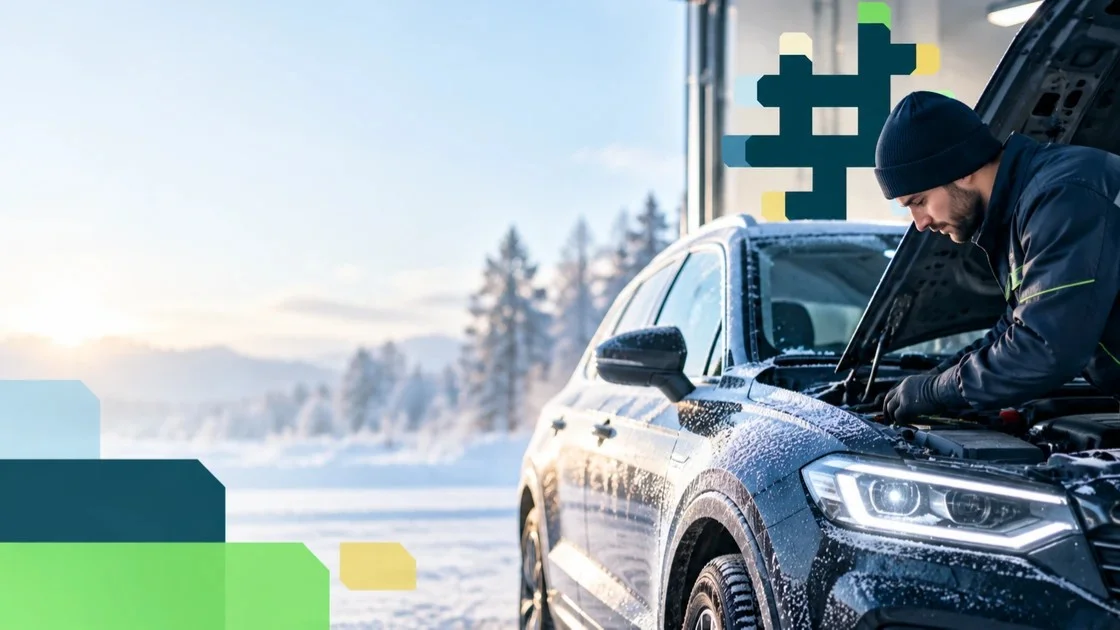
Winter Car Check: What Does It Include and When Should You Get One?
By the end of October, queues start forming outside tyre shops, and for many drivers, that's where winter car preparation begins and ends. But tyre shops focus on tyres. The battery, antifreeze, brakes and lights often go unchecked, even though problems with these components can leave your car stranded on a cold winter morning.
This guide explains what a winter vehicle check includes, why it matters and when is the best time to have one done.
What Is a Winter Car Check — and What Isn't It?
A winter car check is a short preventive inspection of the vehicle components most affected by cold temperatures, moisture and road salt. It is not a legal requirement and is not part of the mandatory roadworthiness inspection.
In Serbia, it is also known as a winter service or pre-winter inspection. Since there is no standardised package, the services included may vary between workshops. That's why it's worth asking exactly what the inspection covers.
Why Is a Winter Car Check Important?
Cold Weather Reveals Problems That Summer Can Hide
At low temperatures, engines are harder to start, oil becomes thicker, and batteries deliver less power precisely when more is needed.
According to statistics from the German automobile association ADAC, in 2025, almost every second roadside assistance callout was caused by a discharged or faulty battery.
Safety
During winter, drivers spend more time on the road after dark, while road surfaces are often wet, covered in salt or icy.
Serbia's Road Traffic Safety Agency states that summer tyres lose grip at temperatures below 7°C. Depending on road conditions and tyre condition, braking distances can be up to twice as long as with winter tyres.
Worn brakes or incorrectly adjusted headlights become much more serious problems in winter than in summer.
Costs
Some breakdowns can be prevented through a timely inspection.
Coolant that no longer provides sufficient frost protection can cause expensive engine damage. A weak battery can mean a tow truck, a wasted day and an emergency replacement at a price you didn't get to choose.
Legal Requirements
In Serbia, from 1 November to 1 April, vehicles must have the required winter equipment when there is snow, ice or black ice on the road.
The obligation depends on road conditions, not simply on the date. But once the snow arrives, it may already be too late to prepare.
What Does a Winter Car Check Include?
1. Battery
A workshop uses a suitable tester to check the battery's condition, cold cranking performance (CCA), terminal connections and the charging system.
Take action if the starter motor turns more slowly than usual or if the dashboard lights flicker when starting the engine.
We explain why a battery that survived the summer might not survive the winter in our dedicated article: Your Car Battery Doesn't Die Because of the Cold — It Was Already Failing, and the Cold Just Reveals It.
2. Coolant (Antifreeze)
Checking the coolant level is not enough.
It is also important to check the lowest temperature at which the coolant can protect the engine from freezing, using a dedicated tester or refractometer.
The German automobile association ADAC recommends frost protection down to at least −25°C.
If water was added to the cooling system during the summer, the coolant may have become diluted and may offer less protection than expected.
Antifreeze also protects the cooling system against corrosion. Always use the coolant type specified by the vehicle manufacturer.
Important: Never open the coolant expansion tank cap while the engine is hot. The system is pressurised, and hot coolant may spray out and cause burns.
3. Tyres
The inspection should include:
Tyre type and winter-use markings (M+S, and the mountain-and-snowflake symbol on newer winter tyres).
Tread depth, which must be at least 4 mm for tyres used as mandatory winter equipment under Serbian regulations.
Whether all four tyres are of the appropriate type and approved dimensions, with compatible tyres fitted on the same axle.
Tyre age, identified by the DOT marking on the sidewall, and any damage to the sidewalls or tread.
Tyre pressure, which decreases as temperatures fall and should therefore be checked more frequently during winter, with the tyres cold.
If you're buying only two new tyres, find out where they should actually be fitted: New Tyres: Front or Rear?.
4. Brakes
The inspection covers brake pads, discs and brake fluid.
Brake fluid absorbs moisture over time and should be replaced according to the vehicle manufacturer's recommended interval, regardless of mileage.
On slippery roads, it is especially important that the braking system operates evenly across all wheels.
5. Lights
All vehicle lights must be working properly, including brake lights, fog lights and number plate lights.
Headlight alignment should also be checked.
Incorrectly adjusted headlights either fail to illuminate enough of the road ahead or dazzle oncoming drivers.
6. Wipers, Washer Fluid and Demisting
Check that:
Wiper blades clean the windscreen without leaving streaks or skipping.
The washer fluid reservoir contains winter-grade fluid.
The rear window defroster works properly.
The ventilation system can quickly demist the windscreen.
For more advice, including why even lukewarm water can be unsafe on a frozen windscreen, read our article: Frozen Windscreens and Wipers in Winter: What Really Helps and What Causes Damage.
7. Heating and Cabin Air Filter
If the ventilation system produces weak airflow or the windows constantly fog up, a clogged cabin air filter is often one possible cause.
In winter, this is not just a matter of comfort — it's a matter of visibility.
8. Engine Oil, Filters and Fuel
The engine oil level should be checked, along with whether an oil change is approaching according to the service schedule.
Most modern vehicles do not need a separate “winter oil”, as multigrade engine oils with a W in their viscosity grade are designed for year-round use.
What matters is using oil that meets the vehicle manufacturer's specifications.
For diesel engines, the fuel filter becomes particularly important in winter.
At low temperatures, paraffin wax can begin to crystallise in diesel fuel, reducing its ability to flow. An old or partially clogged fuel filter can make the problem worse.
Read more in our upcoming article: [LINK: Vehicle Fluids and Fuel in Freezing Temperatures — coming soon].
9. Door Seals and Locks
Rubber seals around the doors and boot should be treated with a suitable silicone-based product to prevent them from freezing and sticking to the bodywork.
This is one of the least expensive preventive measures on the list, but anyone who has struggled with a frozen car door on a winter morning knows how frustrating it can be.
10. Underbody and Bodywork
Road salt accelerates corrosion, particularly in areas where the paintwork or protective coating is already damaged.
Special attention should be paid to brake pipes, hoses and protective underbody components, especially on older vehicles.
Existing damage should ideally be repaired before winter, while the underbody should be rinsed regularly during and after the winter season.
You've Changed Your Tyres. But Is the Rest of Your Car Ready for Winter?
Your battery, brakes and antifreeze won't check themselves.
Find a workshop on AutoKonekt and book an inspection before the first serious cold spell.
→ Find a Workshop and Book an Appointment: autokonekt.rs
What Can You Check Yourself, and What Should You Leave to a Professional?
What You Can Check Yourself
Coolant and washer fluid levels, with the engine completely cold.
Whether all lights are working, with help from another person or by using a reflection in a shop window.
The condition of the wiper blades.
Tyre pressure and tread depth.
Equipment kept in the vehicle, including a snow brush, plastic ice scraper, jump leads and snow chains for driving outside urban areas when required.
What Should Be Checked by a Workshop?
Battery condition, cold cranking performance and charging system.
Coolant freezing point, if you don't have a suitable tester.
Brakes and brake fluid.
Headlight alignment.
Underbody condition and diagnostic fault codes.
How Long Does a Winter Car Check Take?
A basic pre-winter vehicle inspection can often be completed in approximately 20 to 40 minutes, depending on the scope of the inspection and the vehicle's condition.
More detailed checks or repairs to identified problems may require additional time.
Before booking, ask the workshop what the inspection includes and how long it is expected to take.
When Is the Best Time for a Winter Car Check?
The short answer is: before the first frost, not after it.
When temperatures drop significantly for the first time, workshops and roadside assistance services often experience a surge in demand.
From mid-October to mid-November: A practical period for most of Serbia, with earlier preparation recommended in mountainous regions.
When daytime temperatures consistently fall below approximately 7°C: This is not an absolute threshold, but a useful guideline around which Serbia's Road Traffic Safety Agency also recommends switching to winter tyres.
When changing tyres or having a regular service: Combine everything into a single workshop visit.
Before a longer winter journey: Especially if you're travelling to the mountains or going away for the holidays.
Book in Advance
Workshops tend to be particularly busy towards the end of October.
Find a workshop in your city and choose an appointment that suits you.
Quick Winter Car Preparation Checklist
Battery tested; terminals clean and securely connected.
Coolant provides sufficient frost protection for the temperatures expected in your area.
Winter tyres of the approved dimensions fitted on all four wheels, with at least 4 mm of tread and the correct pressure.
Brakes and brake fluid checked.
All lights working and headlights correctly aligned.
Wiper blades in good condition and winter washer fluid topped up.
Heating, windscreen demisting and rear window defroster working properly.
Engine oil and filters maintained according to the service schedule.
Door seals treated; snow brush, ice scraper and jump leads kept in the vehicle.
If something on the list doesn't pass the check, deal with it now, while the cold is still limited to the mornings.
Frequently Asked Questions
Is a Winter Car Check Mandatory?
No. A winter car check is a preventive inspection, not a legal requirement.
However, under Serbian regulations, vehicles must have the required winter equipment between 1 November and 1 April whenever there is snow, ice or black ice on the road.
When Is the Best Time to Have a Winter Car Check?
Before the first frost.
In practice, this is usually between mid-October and mid-November, or when daytime temperatures start consistently falling below approximately 7°C.
Does the Mandatory Roadworthiness Inspection Replace a Winter Car Check?
No.
A standard roadworthiness inspection does not measure the coolant's freezing point or assess whether the battery is ready for cold starts.
Furthermore, the last mandatory inspection may have taken place several months earlier.
Do I Need to Switch to “Winter Engine Oil”?
For most modern vehicles, no.
Multigrade engine oils with a W in their viscosity grade, such as 5W-30, are designed for year-round use.
The important thing is to use engine oil that meets the manufacturer's specifications.
How Much Does a Winter Car Check Cost?
The price depends on the workshop and the services included, as there is no standardised winter inspection package.
Before booking, ask exactly what the inspection covers and which additional services or repairs would be charged separately if a problem is found.