Wheel Alignment and Wheel Balancing: What’s the Difference and When Do You Need Each?
Two services that are constantly confused, one widespread misconception about vehicle inspections, and the numbers that show where the real cost lies.
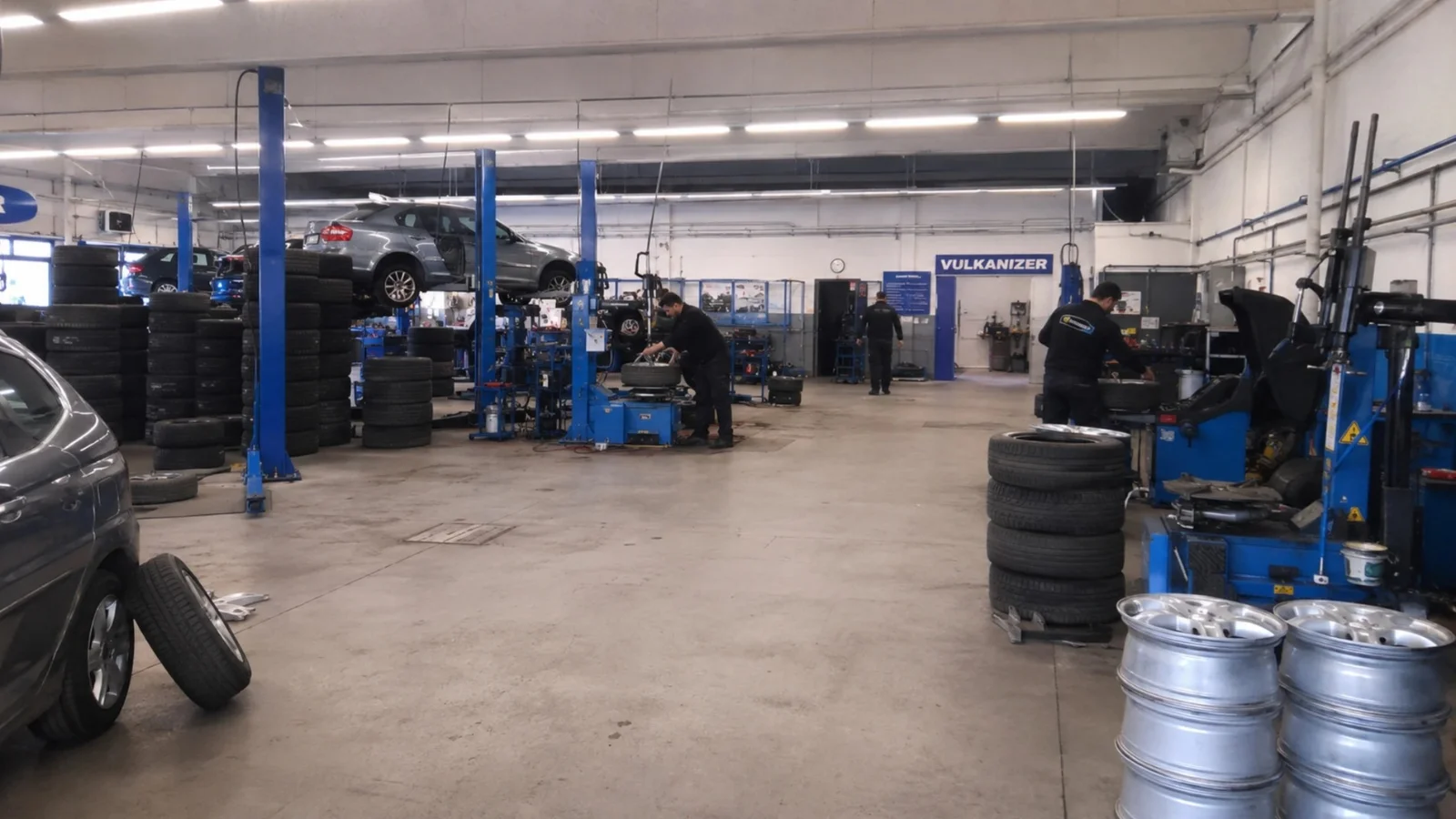
When you visit a tyre shop in October to change your tyres, you will often hear the question: “Shall we do the alignment as well?” At that point, most drivers are not entirely sure what is actually being offered — and many believe that wheel alignment and wheel balancing are the same thing, just two different names for the same service.
They are not. These are two different services that solve two different problems, are performed on different machines, and produce different symptoms. If you confuse the two, you may end up paying for a service that will not solve the problem you actually have.
Here is how to tell them apart.
Wheel balancing: a mass distribution problem
A wheel is made up of the tyre and the rim. Neither component has perfectly uniform mass distribution — there are microscopic differences in tyre thickness, rim casting, and even the position of the valve.
When the wheel is stationary, these differences mean very little. At 100 km/h, however, the wheel rotates around 15 times per second, and every extra gram on one side begins to generate a force that tries to pull the wheel out of balance. The result is vibration.
Wheel balancing solves this by placing small weights on the rim to compensate for the imbalance. That is why balancing is a standard part of every tyre fitting — each time a tyre is removed from the rim and fitted again, the mass distribution changes.
Typical sign: vibration that appears within a certain speed range — most commonly between 90 and 120 km/h — and disappears when you slow down. If the steering wheel vibrates, the problem is probably on the front axle. If the vibration is felt through the seat or floor, it is more likely to come from the rear axle.
Wheel alignment: an angle problem
Wheel alignment — technically, wheel geometry — has nothing to do with mass. It deals with the angles at which the wheels sit in relation to the vehicle and to the road surface.
These angles are defined by the manufacturer, and the vehicle is designed to operate within those specifications. Over time, they can change due to impacts with potholes and kerbs, wear in rubber bushings and ball joints, suspension component replacement, or changes in vehicle ride height.
Three angles are most commonly measured:
Toe — whether the wheels, viewed from above, are parallel or slightly angled towards or away from each other. This is the angle that has the greatest effect on tyre wear and fuel consumption.
Camber — whether the wheel, viewed from the front, is vertical or tilted inward or outward. Incorrect camber can wear one edge of the tyre while leaving the opposite edge looking almost new.
Caster — the steering-axis angle that gives the vehicle directional stability and helps the steering wheel return to centre after a turn. This angle is not mentioned in regulations by accident — more on that below.
Typical sign: the vehicle pulls to one side on a straight road, the steering wheel is not centred while driving straight, or the tyres wear unevenly.
How to tell which problem you have
What you notice — What you probably need
Vibration at a certain speed that disappears when you slow down — Wheel balancing
Steering-wheel vibration that increases with speed — Wheel balancing
Vehicle pulls left or right on a straight road — Wheel alignment
Steering wheel is off-centre while driving straight — Wheel alignment
One edge of the tyre is worn while the other looks almost new — Wheel alignment
Tyre tread feels “saw-toothed” to the touch — Wheel alignment (toe)
Steering wheel returns slowly to centre after a turn — Wheel alignment (caster)
You have just replaced your tyres — Balancing is required; alignment should be checked as needed
Remember this
Wheel balancing cannot correct poor wheel geometry, and wheel alignment cannot eliminate vibration caused by an unbalanced wheel. If someone tells you otherwise, consider getting a second opinion.
How poor wheel alignment affects safety
A tyre touches the road over an area roughly the size of a human palm. Everything your car does — accelerates, brakes, turns, avoids an obstacle — happens through four such contact patches.
When wheel geometry is outside the permitted tolerance, the tyre does not sit on the road across its full width. The contact area is reduced, and that affects everything:
Stopping distance increases, especially on wet roads, where effective water evacuation through the tread is critical.
The vehicle becomes less predictable during sudden evasive manoeuvres — precisely when stability matters most.
Braking can become uneven, because braking force is not transmitted equally through all wheels.
Wear can remain hidden. Uneven wear often first affects the inner edge of the tyre, which you may not see unless you turn the steering wheel fully or lift the vehicle.
The last point is particularly dangerous because the problem can remain invisible. A driver who occasionally checks the tyres and sees what appears to be adequate tread may actually be driving on a tyre whose inner edge is almost completely worn out.
Vehicle inspection: what the regulations actually require
This is where Serbian automotive content often gets things wrong. You will frequently read that you can “fail the vehicle inspection because of bad alignment.” That is not accurate — but neither is the opposite claim that wheel geometry has nothing to do with the inspection.
Here is how it actually works.
Wheel geometry itself is not measured during the vehicle inspection. The Rulebook on Vehicle Technical Inspection (“Official Gazette of the Republic of Serbia”, Nos. 31/2018, 70/2018 and 62/2022), in Articles 21–23, explicitly lists the equipment that inspection stations must have and use: brake-force rollers, a diesel smoke opacity meter, an exhaust-gas analyser, a pressure gauge, a headlight beam tester, scales, a brake-fluid moisture tester, measuring tapes and a calliper. Wheel-alignment equipment is not on that list. Equipment used to check play between the wheels and chassis is mandatory only on inspection lines for vehicles with a maximum permissible mass above 3.5 tonnes.
However, the consequences of poor wheel geometry are checked. Article 34 of the same rulebook requires the inspection to include, among other things, the steering system, suspension system and running gear. This is where three issues directly affected by poor alignment come into play:
1. Tread depth. Under Article 86 of the Rulebook on the Division of Motor Vehicles and Trailers and Technical Requirements for Vehicles in Road Traffic, tread depth must be greater than the minimum specified by the manufacturer and indicated by the TWI marker on the tyre. If there is no such marker, the minimum permitted tread depth for passenger vehicles is 1.6 mm. What matters is the most worn point — and with poor wheel geometry, that is very often the edge you cannot see.
2. Play in the steering and suspension systems. The same issue that caused the geometry to move out of specification may also be causing excessive play — worn ball joints, tie rods or silent blocks. Excessive play is checked and may result in the vehicle being declared unroadworthy.
3. Steering self-centring. Article 25 of the same rulebook explicitly requires the front wheels, while the vehicle is moving on a flat, horizontal surface, to begin returning towards the straight-ahead position after the steering control is released. This is directly related to caster.
So: wheel alignment itself is not a measured inspection item, but it can cause problems that are.
Also, if you are changing tyres ahead of November, bear in mind that tyres used as winter equipment must have a minimum tread depth of 4 mm — higher than the general minimum.
What it costs: tyres before fuel
The effect on fuel consumption is real, but Serbian automotive content routinely exaggerates it. The percentages circulating online often have no cited source.
The mechanism itself is not in dispute: a misaligned wheel is partly dragged sideways instead of rolling freely, which increases rolling resistance and forces the engine to use more energy. The only question is how much.
For reference, a report by the U.S. National Research Council, Tires and Passenger Vehicle Fuel Economy (2006), found that for most passenger cars, reducing rolling resistance by 10% improves fuel economy by around 1–2%. With normal, moderate wheel-alignment deviations, the effect is therefore noticeable, but not dramatic.
With major deviations, however, the picture is very different. In a controlled study published in 2024 in the Journal of Engineering, increasing total front-axle toe from 0.00° to 4.20° increased rolling resistance by around 129%, CO₂ emissions by approximately 37%, and reduced tyre life by as much as 98% — from around 92,250 km to only about 1,540 km.
The point
Fuel is not the main cost of poor wheel geometry — tyres are.
An alignment performed once costs significantly less than a pair of tyres that wear out twice as quickly as they should, and incomparably less than the consequences of a longer stopping distance on a wet road.
When should you have the alignment checked?
There is no legally prescribed interval, but there are several situations in which checking the alignment makes sense:
During seasonal tyre changes. The wheels are already being removed, tyre wear is clearly visible, and this is the easiest and most economical moment to detect a problem.
After a hard impact with a pothole, kerb or obstacle — even if you hear nothing and nothing appears visibly damaged.
After replacing any suspension component — shock absorbers, springs, tie rods, joints or silent blocks.
After changing the vehicle’s ride height or fitting wheels of a different size.
Whenever you notice any of the symptoms listed above.
If none of these situations applies, checking the alignment once a year is a reasonable approach — and the most logical time is during a tyre change, since you are already visiting a tyre shop.
Conclusion
Wheel balancing addresses vibration. Wheel alignment corrects wheel angles and, through them, affects tyre wear, vehicle behaviour and, to some extent, fuel consumption. They are not interchangeable and they do not solve the same problems.
Wheel alignment itself is not measured during a vehicle inspection, but its consequences — tyre tread depth, play in the suspension and steering systems, and steering behaviour — are all checked.
That is why it makes more sense to think about wheel alignment when changing your tyres than just before vehicle registration.
Book an appointment online
On the AutoKonekt platform, you can find verified tyre shops and auto repair services near you and book an appointment online — without calling and waiting for someone to answer the phone.
Frequently Asked Questions
Is wheel alignment required after every tyre change?
No. Balancing is a standard part of tyre fitting, while wheel alignment is carried out when needed. However, a tyre change is an excellent opportunity to check the condition, because tyre wear patterns are easier to see at that point.
Can wheel alignment eliminate steering-wheel vibration?
As a rule, no. Vibration that appears within a certain speed range is almost always caused by an unbalanced wheel or a deformed rim, rather than by wheel geometry.
Can I fail a vehicle inspection because of poor wheel alignment?
Not because of the alignment itself — it is not measured. However, you can fail because of problems caused by poor geometry, such as tread depth below the legal minimum at the most worn part of the tyre, or excessive play in the steering and suspension systems.
How often should wheel alignment be checked?
There is no legally prescribed interval. A practical rule is once a year or during a seasonal tyre change, with additional checks after a major impact or suspension component replacement.
How can I check for myself whether I need a wheel alignment?
On a flat, empty road, briefly loosen your grip on the steering wheel and observe whether the vehicle maintains a straight line. Then turn the steering wheel fully and inspect the inner edges of the front tyres — if one side of the tread is visibly shallower than the other, it is time to have the alignment checked.
Sources: Rulebook on Vehicle Technical Inspection (“Official Gazette of the Republic of Serbia”, Nos. 31/2018, 70/2018 and 62/2022) · Rulebook on the Division of Motor Vehicles and Trailers and Technical Requirements for Vehicles in Road Traffic · National Research Council, Tires and Passenger Vehicle Fuel Economy (TRB Special Report 286, 2006) · Das et al., Journal of Engineering, 2024.