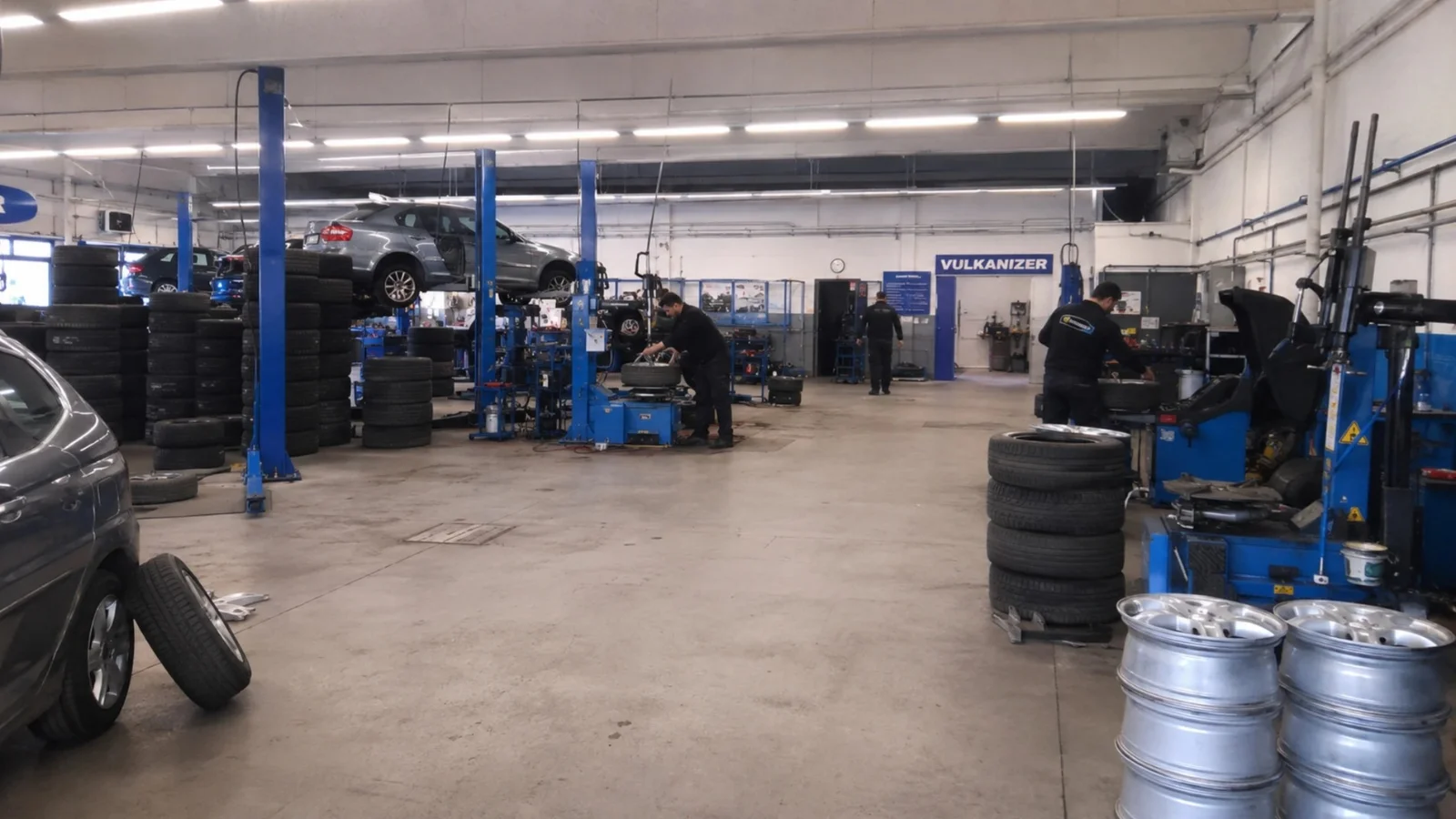
What Does a Modern Tyre Service Centre Do Today?
For many drivers, visiting a tyre service centre means one thing: replacing winter tyres with summer tyres, or summer tyres with winter tyres.
However, a modern tyre service centre has long been more than just a place where tyres are changed twice a year. Today’s vehicles have increasingly larger wheels, lower-profile tyres, run-flat technology and tyre pressure monitoring systems. At the same time, drivers expect to be able to check tyre condition, repair damage, balance wheels, inspect wheel alignment and store a seasonal set of tyres in one place.
As a result, traditional tyre workshops are gradually becoming specialised centres for tyres and wheels.
Need a reliable tyre service centre? At autokonekt.rs, you can quickly find trusted partners for tyres and wheels, while the autokonekt.rs/lokacije page allows you to search for service centres by city across Serbia.
What services can you expect from a well-equipped modern tyre service centre?
1. Tyre Fitting and Removal
Tyre fitting and removal are the most basic and recognisable services provided by tyre workshops.
There are two typical situations when seasonal tyres are changed. In the first, the driver owns two complete sets of wheels, meaning that the summer and winter tyres are already mounted on separate rims. In that case, one complete set is simply removed from the vehicle and replaced with the other.
In the second, the driver uses the same set of rims throughout the year, so the technician must remove the tyre from the rim and fit another one. This requires more time and more careful handling.
A quality service should not end with fitting the tyre. The technician should also inspect:
the condition of the tread;
cracks and other visible damage;
the condition of the sidewalls;
the age of the tyre;
the condition of the valve;
the recommended tyre pressure;
any possible damage to the rims.
Particular care is required with low-profile and run-flat tyres. Their fitting requires appropriate equipment and experience in order to prevent damage to the tyre, rim or pressure sensor.
When reinstalling the wheels, it is also important to tighten the bolts according to the torque value specified by the vehicle manufacturer. Excessive tightening is not a sign of better service. On the contrary, it may make future wheel removal more difficult or damage certain components.
2. Wheel Balancing
Wheel balancing is most commonly performed when tyres are fitted, but it may also be required between two seasonal tyre changes.
Uneven weight distribution within a wheel can cause vibrations, which are most often felt through the steering wheel or the vehicle body. These vibrations may only appear within a certain speed range, which is why drivers do not always associate the problem with the wheels.
During balancing, the wheel is mounted on a specialised machine that measures the imbalance. The technician then places weights in the appropriate positions in order to correct it.
Properly balanced wheels contribute to:
smoother and more comfortable driving;
more even tyre wear;
reduced vibrations;
lower stress on suspension and steering components.
However, not every vibration automatically means that the problem is poor balancing. The cause may be a deformed rim, a damaged tyre or worn suspension components. A good tyre technician will therefore not simply repeat the balancing process, but will try to identify the actual source of the problem.
3. Inspection and Repair of a Damaged Tyre
A nail or screw in the tread does not always mean that the tyre must be replaced immediately.
Before making a decision, the technician should remove the tyre from the rim and inspect it both externally and internally. Only then can the technician make a more reliable assessment of where the damage is located, how large it is, the angle at which the foreign object entered the tyre, whether the internal structure has been damaged and whether the vehicle was driven with very low tyre pressure.
Minor damage in the tread area can, in some cases, be professionally repaired. On the other hand, damage to the sidewall, visible deformation or exposed structural cords generally mean that a safe repair is no longer possible.
The European Tyre and Rim Technical Organisation, ETRTO, points out that such damage is particularly serious because moisture may penetrate the inner layers and cause further deterioration.
A responsible tyre technician will therefore not try to repair every tyre. Sometimes, the most important professional decision is to tell the driver that the tyre can no longer be repaired safely.
4. Wheel Alignment Inspection and Adjustment
Wheel alignment is not the same as wheel balancing.
Balancing concerns the even distribution of weight within the wheel itself, while wheel alignment determines the position of the wheels in relation to the vehicle and the road surface.
Signs that the wheel alignment may need to be checked include:
the vehicle pulling to one side;
the steering wheel not being straight while the vehicle is travelling in a straight line;
uneven tyre wear;
a feeling of instability;
hitting a large pothole or kerb;
replacement of suspension or steering components.
Incorrect wheel alignment can significantly shorten the usable life of new tyres. This is why an alignment check is particularly useful when uneven wear is noticed or when a new set of tyres is fitted.
Although wheel alignment has traditionally been considered a general automotive repair service, an increasing number of modern tyre centres have the necessary equipment or cooperate with workshops that provide this service.
5. TPMS, Rim Service and Tyre Storage
In addition to basic services, an increasing number of tyre workshops are expanding their offer to include rim servicing, work with tyre pressure sensors and seasonal tyre storage.
TPMS Sensors
TPMS is a system that warns the driver when tyre pressure drops in one or more tyres.
In direct TPMS systems, a sensor is usually installed on each wheel. Extra care is therefore required during tyre fitting and removal in order to prevent damage to the sensor.
Depending on the vehicle, the tyre service centre may perform:
sensor reading and diagnostics;
operational checks;
replacement of valves or service components;
programming of a new sensor.
TPMS has been mandatory for many years on new passenger vehicles in the European Union, while more recent European safety regulations have extended tyre pressure monitoring requirements to additional vehicle categories.
For this reason, diagnostics and servicing of these systems will become increasingly important in the everyday work of tyre technicians.
Rim Service
Hitting a pothole or kerb may deform a rim, cause air loss or create vibrations while driving.
Depending on the available equipment, a tyre service centre may offer:
rim inspection;
straightening of steel or alloy rims;
welding of certain types of damage;
sandblasting;
painting.
Not every rim can or should be repaired. A severely cracked or structurally weakened rim will generally need to be replaced.
Tyre Storage
Tyre storage is a service intended for drivers who do not have enough space to store a second set of tyres.
It usually includes:
receiving and labelling the tyre set;
recording the position of each wheel;
inspecting tyre condition;
measuring tread depth;
cleaning;
notifying the driver when it is time for the next tyre change.
Tyres should be stored away from direct sunlight, moisture, high temperatures, chemicals and sources of ozone.
ETRTO recommends that tyres be cleaned, inspected and properly protected before storage, since correct storage helps preserve them until the next season.
Looking for a service centre offering tyre storage, TPMS diagnostics or rim repair? You can find a complete network of trusted partners at autokonekt.rs, together with an overview of services by city at autokonekt.rs/lokacije.
Do Tyre Service Centres in Serbia and the European Union Offer the Same Services?
The basic services are largely the same.
In both Serbia and the countries of the European Union, tyre service centres provide tyre fitting, balancing, tyre repair, valve replacement, pressure checks and wheel inspections. Better-equipped workshops also offer wheel alignment, rim servicing, TPMS diagnostics and tyre storage.
The main difference is not so much in what is done, but in how the service is organised.
In more developed European markets, it is more common to find:
clearly defined service packages and publicly displayed prices;
fully online appointment booking;
automatic reminders;
digital vehicle and tyre histories;
a larger number of tyre storage facilities;
mobile tyre services;
contracts with fleets, leasing companies and insurers.
This does not mean that such services are unavailable in Serbia. On the contrary, an increasing number of domestic workshops are investing in modern equipment and expanding their range of services.
However, there is still considerable room for improvement in online booking, service standardisation and customer communication.
How to Recognise a Good Tyre Service Centre
The lowest price does not always represent the best choice.
A good tyre service centre should:
inspect the tyre before recommending a repair;
use equipment suitable for the tyre size and type;
take proper care of rims and TPMS sensors;
balance the wheels accurately and tighten the bolts correctly;
point out uneven tyre wear and explain why a particular intervention is necessary;
refuse repairs that are not safe;
clearly communicate the price before starting any additional work.
It is particularly important to observe how the workshop reacts when it identifies a problem.
A professional tyre technician will not try to frighten the customer, but will also not ignore damage that may compromise safety.
A Modern Tyre Technician Is an Adviser, Not Just a Service Provider
The tyre is the only part of the vehicle that is constantly in direct contact with the road.
Grip, braking, stability and the behaviour of the vehicle in critical situations all depend on its condition.
This is why the role of a tyre technician should not be reduced to simply removing and fitting wheels as quickly as possible.
A modern tyre service centre helps the driver to:
choose the right tyre;
recognise uneven wear;
identify a problem in time;
extend the usable life of the tyre;
store a seasonal set correctly;
use the vehicle more safely.
This is where the biggest change has taken place.
A tyre service centre is no longer just a place where tyres are changed when the seasons change. It is becoming a specialised partner for tyres, wheels and the safe contact between the vehicle and the road.
Frequently Asked Questions
Should a tyre service centre do more than simply replace tyres?
Yes. In addition to fitting and removal, a quality tyre service centre should inspect the condition of the tyres, rims and valves, balance the wheels and, when necessary, point out potential problems with wheel alignment or the TPMS system.
When can a tyre be repaired, and when must it be replaced?
Minor damage in the tread area can often be professionally repaired. Damage to the sidewall, exposed structural cords or visible deformation generally mean that a safe repair is no longer possible and that the tyre must be replaced.
What is TPMS and why is it important?
TPMS is a system that warns the driver when tyre pressure drops.
It has been mandatory for new passenger vehicles in the European Union for many years, while newer regulations extend tyre pressure monitoring requirements to additional vehicle categories.
What is a “tyre hotel” and is it worth using?
A tyre hotel is a seasonal tyre storage service provided by a tyre workshop. It usually includes tyre condition inspection and tread depth measurement.
It is particularly useful for drivers who do not have suitable space to store their tyres correctly at home.
How do I choose a reliable tyre service centre?
Check whether the workshop inspects the tyre before recommending a repair, uses equipment suitable for your tyres, clearly explains the price in advance and is prepared to refuse a repair that would not be safe.
Through the AutoKonekt platform, you can also rely on reviews and feedback from other users who have already used the services of that particular workshop.