Engine Decarbonization: Hydrogen, Chemicals, or Walnut Shell Blasting?
November 2026 · Approximately 9-minute read · Follow-up article on engine decarbonization
In brief: In Serbia, at least five different procedures are marketed under the term "engine decarbonization" — ranging from fuel additives poured into the tank to removing the intake manifold. They do not clean the same areas or solve the same problems. Independent evidence supporting the claimed benefits of hydrogen engine cleaning, which requires no disassembly, remains limited. In gasoline direct injection engines, stubborn deposits on intake valves are most reliably removed through mechanical cleaning, usually walnut shell blasting. In diesel engines, the EGR valve and intake manifold are often the main areas of concern — but only when diagnostics confirm that the problem lies there. Before choosing a method, you need to know where the deposits are. Diagnostics, not advertising, should provide that answer.
In our previous article, Engine Decarbonization — When It Helps, When It's a Waste of Money, and How to Tell the Difference, we explored whether your engine actually needs decarbonization.
This time, we take things a step further: if diagnostics have confirmed the presence of carbon deposits, which method should you choose? What can each method realistically achieve, how much does it cost, and when might you be wasting your money?
The First Question Isn't "Which Method?" but "Where Are the Deposits?"
Carbon deposits do not accumulate evenly throughout an engine. The easiest way to understand them is to divide the engine into three areas:
Intake side — intake manifold, throttle body, EGR valve and its passages, and the backs of intake valves.
Combustion chamber — piston crowns, cylinder head surfaces, injector tips, and spark plugs.
Exhaust side — turbocharger (particularly the variable geometry mechanism), catalytic converter, and diesel particulate filter (DPF).
Each decarbonization method reaches certain areas but not others.
If a workshop cannot explain which area it intends to clean and why, that is the first sign that you may be choosing a treatment blindly.
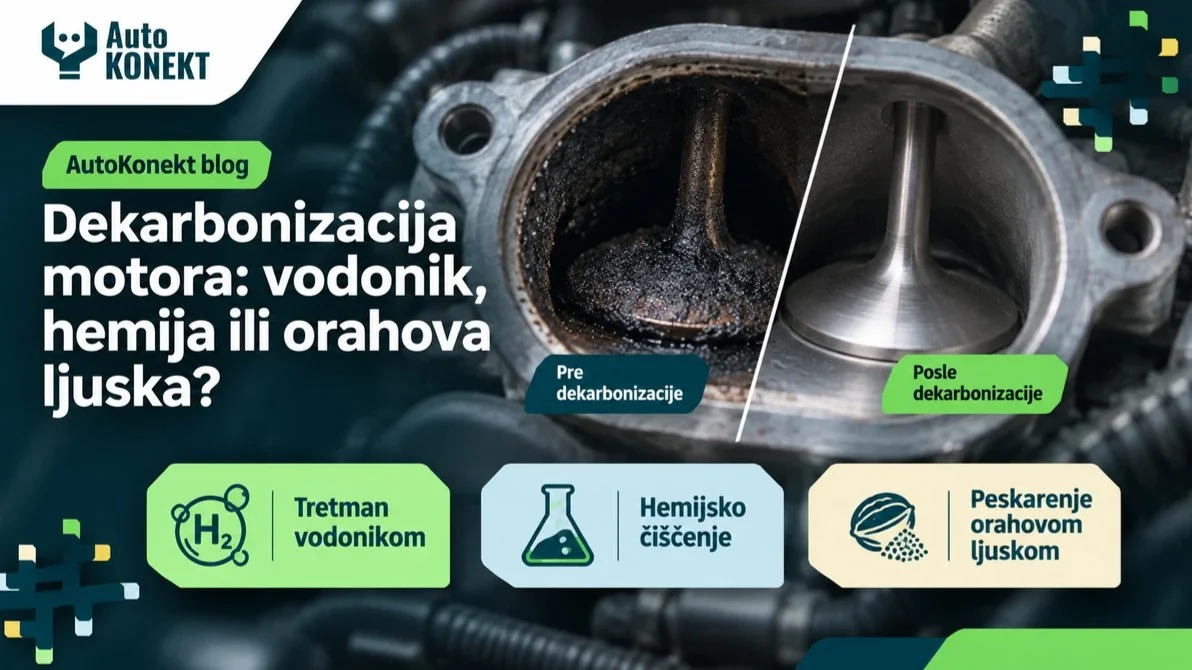
1. Hydrogen (HHO) Engine Decarbonization
How it works: A machine uses electrolysis to split distilled water into hydrogen and oxygen. This gas mixture is introduced into the engine's air intake through a hose while the engine is running, typically for 45 to 60 minutes, and burns alongside the fuel. No engine components are dismantled.
What it can realistically do: The gas passes through the combustion chamber and exhaust system, which is why the treatment is generally marketed as a way to clean these areas.
However, the fact that gas passes through these areas does not, by itself, prove that it removes carbon deposits. There is limited independent testing confirming these effects in modern engines, and the impression that an engine "runs more smoothly" after treatment is not a substitute for objective measurements.
Where the claims go too far: Advertisements for this service frequently promise lower fuel consumption, restored "factory-level" performance, a clean DPF, and longer engine life.
In the United Kingdom, the Advertising Standards Authority (ASA) has repeatedly challenged such claims because companies failed to provide sufficient independent evidence.
In one case, a company relied on a test conducted in 1977 to support its claims — a test that was not relevant to modern engines.
This does not necessarily mean the procedure has no effect. It means that promises such as "restoring your engine to factory condition" have not been substantiated.
What to watch out for: Equipment quality and technician experience vary. Before treatment, ask whether the turbocharger and DPF are in good condition and whether the workshop measures exhaust emissions before and after the procedure. Such measurements can help establish whether any measurable difference has occurred.
Approximate cost: According to publicly available workshop price lists in Serbia, hydrogen cleaning for passenger vehicles with engines up to 2.0 litres typically costs around RSD 4,000–9,000, depending on engine displacement.
Some workshops charge approximately €150 for treatments using branded equipment, while promotional offers may fall below RSD 3,000.
Who might benefit: Drivers who wish to try it as a supplementary maintenance treatment, with realistic expectations — not as a solution to a specific mechanical fault.
2. Chemical Cleaning of the Intake System and EGR Valve
How it works: Three different procedures are often grouped under the same name.
The first involves introducing a cleaning agent (spray or liquid) into the intake system in controlled quantities while the engine is running.
The second involves removing components — such as the EGR valve, throttle body, or intake manifold — and cleaning them directly with chemical solvents.
The third uses foam or liquid applied through the spark plug openings onto the piston crowns and left to work on the deposits.
What it can realistically do: When an EGR valve or intake manifold is removed and cleaned, the results are visible and can be verified.
Without disassembly, chemical cleaners may dissolve softer, oily deposits, but they are much less effective against hard, baked-on carbon deposits on the backs of intake valves in direct injection engines.
What to watch out for: Cleaning liquid introduced into the intake system must be precisely dosed according to the manufacturer's instructions. Introducing too much liquid into a cylinder at once can damage the engine.
If the EGR valve has a mechanical or electrical fault, cleaning will not solve the problem. Replacement may be necessary.
Depending on the vehicle, a new EGR valve can cost approximately RSD 10,000–50,000, excluding labour.
Approximate cost: EGR valve cleaning in Serbian workshops is commonly advertised at approximately RSD 3,000–7,000.
Removal and refitting are often charged separately, particularly when the valve is difficult to access.
Cleaning sprays intended for individual use typically cost around RSD 700–3,800.
Who might benefit: Diesel vehicles equipped with EGR systems, particularly those driven mainly in urban conditions — but only when inspection confirms that deposits in the EGR valve or intake system are causing the problem.
A diagnostic fault code mentioning the EGR system does not automatically mean that the valve needs cleaning.
3. Fuel Additives
How they work: Fuel additives are poured into the fuel tank. Their detergent components act as fuel passes through the system.
What they can realistically do: They can help reduce deposits on fuel injectors and, to some extent, inside the combustion chamber.
In conventional port fuel injection gasoline engines, fuel passes over the intake valves, allowing detergent additives to reach these surfaces as well.
What they cannot do: In gasoline direct injection (GDI) engines, fuel does not pass over the backs of the intake valves, so fuel additives cannot reach these areas.
A technical paper published by SAE, also mentioned in our previous article, demonstrated this distinction: the tested additive reduced deposits on injectors and in the combustion chamber but did not remove deposits from the intake valves of GDI engines.
Fuel additives also do not clean the EGR valve.
Approximate cost: This is generally the least expensive option — a bottle of fuel additive usually costs less than a professional workshop treatment.
Who might benefit: Drivers looking for preventive maintenance rather than a solution to an existing, significant carbon buildup problem.
4. Mechanical Cleaning with Walnut Shells (Walnut Blasting)
How it works: The intake manifold is removed to provide access to the intake ports.
The engine is positioned so that the intake valves of the cylinder being cleaned are closed.
A stream of compressed air carrying finely crushed walnut shells is then directed at the carbon deposits, while a vacuum system simultaneously removes the loosened material.
The procedure is repeated for each cylinder.
Walnut shell particles are hard enough to break up carbon deposits but soft enough to avoid damaging the metal surfaces of valves and the cylinder head when the procedure is performed correctly.
Why it is considered one of the most reliable methods for GDI engines: This is one of the relatively few cleaning procedures specifically prescribed by a vehicle manufacturer.
In a service bulletin covering its N54 engines, BMW identified carbon deposits on intake valves and ports as a possible cause of drivability problems and engine misfires.
The prescribed procedure involved removing the intake manifold and cleaning the affected areas using dedicated walnut shell blasting equipment.
Similar problems are known to occur in certain older Audi and Volkswagen direct injection engines, as well as other GDI engines.
What to watch out for: If walnut shell particles enter a cylinder, they can cause damage.
That is why ensuring that the valves are closed and using proper vacuum extraction during cleaning are essential.
A professional workshop should inspect and record the condition of the intake ports and valves with an endoscope before and after cleaning.
Ask to see these images or recordings — they provide valuable evidence that the work has been carried out.
The intake manifold gaskets are also typically replaced during reassembly.
Approximate cost: Publicly advertised prices for walnut blasting in Serbia are relatively limited because the cost depends heavily on how difficult it is to remove the intake manifold on a particular engine.
Workshops usually provide a quotation after inspecting the vehicle.
Expect this procedure to cost more than hydrogen or chemical cleaning, as it requires several hours of labour and replacement gaskets.
Who might benefit: Gasoline direct injection engines (including engines marketed under names such as TSI, TFSI, GDI, EcoBoost, and others) when an endoscopic inspection confirms carbon deposits on the intake valves.
5. Conventional Cleaning with Engine Disassembly
How it works: The cylinder head is removed, allowing the pistons, valves, and internal passages to be cleaned manually. The work may also involve valve grinding or lapping and replacement gaskets.
What it can realistically do: This is the most thorough cleaning approach, but also the most expensive and invasive.
It makes sense when the cylinder head already needs to be removed — for example, because of a failed head gasket, low compression, or a major engine overhaul.
It is generally not justified solely as a carbon cleaning procedure.
Approximate cost: Because this work is usually part of a larger repair, the workshop provides a vehicle-specific quotation.
What Is Often Sold as Decarbonization but Isn't
DPF cleaning. Regeneration burns accumulated soot inside the diesel particulate filter, but it does not remove ash — the non-combustible residues from oil and fuel additives that gradually accumulate over time.
Regeneration also does not occur automatically during every long drive.
Exhaust gases must reach sufficiently high temperatures, while active regeneration is initiated by the engine control unit when it determines that the filter has accumulated enough soot and the necessary operating conditions have been met.
When regeneration is no longer effective or excessive ash has accumulated, the filter must be removed for professional machine cleaning or replaced.
Hydrogen treatment is not a substitute for either procedure.
A blocked DPF increases exhaust backpressure and can seriously damage the turbocharger. That is why its condition must be assessed separately.
EGR deletion. Some mechanics offer to disable the EGR valve through software modifications as a cheaper alternative to repair.
This is not cleaning.
It results in increased emissions and higher combustion temperatures, and the vehicle no longer operates in accordance with its original type-approved configuration.
Which Method Is Suitable for Which Engine?
Diesel engine with black exhaust smoke or EGR-related fault codes: Start with diagnostics. The same symptoms may be caused by faulty injectors, turbocharger problems, airflow sensors, or intake leaks. Cleaning the EGR valve and intake system only makes sense once the cause has been confirmed. Check the DPF separately.
Gasoline direct injection engine with rough idling, hesitation, or misfires: Start with an endoscopic inspection of the intake valves, followed by walnut blasting if necessary.
Conventional port fuel injection gasoline engine: Carbon deposits on intake valves are less common. If symptoms occur, check the fuel injectors and ignition system first.
Engine with no symptoms: None of these cleaning services is inherently necessary.
Five Questions to Ask Before Paying
1. Which cleaning method do you use, and which part of the engine does it target — the intake system, combustion chamber, or exhaust system?
2. How will we verify the results — through endoscopic images, engine operating parameters, or exhaust emissions measurements before and after treatment?
3. What exactly is included in the price — diagnostics, disassembly, gaskets, ECU resets, and adaptations?
4. What happens if the symptoms remain unchanged?
5. Will I receive a written cost estimate?
Under Serbia's Consumer Protection Law, for services costing more than RSD 5,000, the service provider must prepare an itemised estimate and obtain the consumer's written consent before starting the work.
Do not simply agree to "do whatever needs to be done."
Frequently Asked Questions
How much does engine decarbonization cost in Serbia?
It depends on the method.
Hydrogen cleaning typically costs around RSD 4,000–9,000, while EGR valve cleaning is generally advertised at RSD 3,000–7,000, plus possible removal and refitting costs.
Walnut shell blasting is usually priced after the vehicle has been inspected.
Does hydrogen engine cleaning clean the DPF?
You should not rely on it for that purpose.
A DPF is maintained through regeneration and, when regeneration is no longer sufficient, professional machine cleaning or replacement may be required.
Can fuel additives replace engine decarbonization?
Only to a limited extent.
They can help with injector deposits, but in GDI gasoline engines they cannot reach the backs of intake valves. They also do not clean the EGR valve.
What is the best cleaning method for gasoline direct injection engines?
For hard carbon deposits on intake valves, walnut shell blasting with intake manifold removal is among the most reliable methods.
How often should engine decarbonization be performed?
There is no universal interval.
For most vehicles, it should only be considered when symptoms and diagnostics indicate that carbon deposits are causing a problem.
Can engine decarbonization damage the engine?
Yes, if performed incorrectly.
That is why the technician's expertise and proper assessment of the engine's condition before and after treatment are more important than the choice of cleaning method alone.
Find a Workshop That Knows the Difference — with AutoKonekt
The choice of cleaning method matters, but choosing the right workshop matters even more.
A good mechanic first identifies where the deposits are, explains why a particular cleaning method is appropriate, and shows you the results — rather than offering the same treatment to every vehicle that comes through the door.
With AutoKonekt, you can find verified car repair workshops in your area, explore their services, and choose the one that best meets your needs.
➜ Visit AutoKonekt, find a workshop near you, and book an engine diagnostic appointment before paying for any cleaning treatment.
Effective cleaning starts with the right question: where are the deposits?
The approximate prices mentioned in this article are based on publicly available price lists from automotive workshops and retailers in Serbia, checked in November 2026. They are provided for guidance only. The final price for your vehicle will be determined by the workshop following an inspection.
Sources
Advertising Standards Authority (ASA), United Kingdom: 2017 ruling concerning hydrogen engine cleaning advertising and guidance on claims relating to fuel additives and aftermarket automotive devices.
Serbian Consumer Protection Law: Zakon o zaštiti potrošača.