
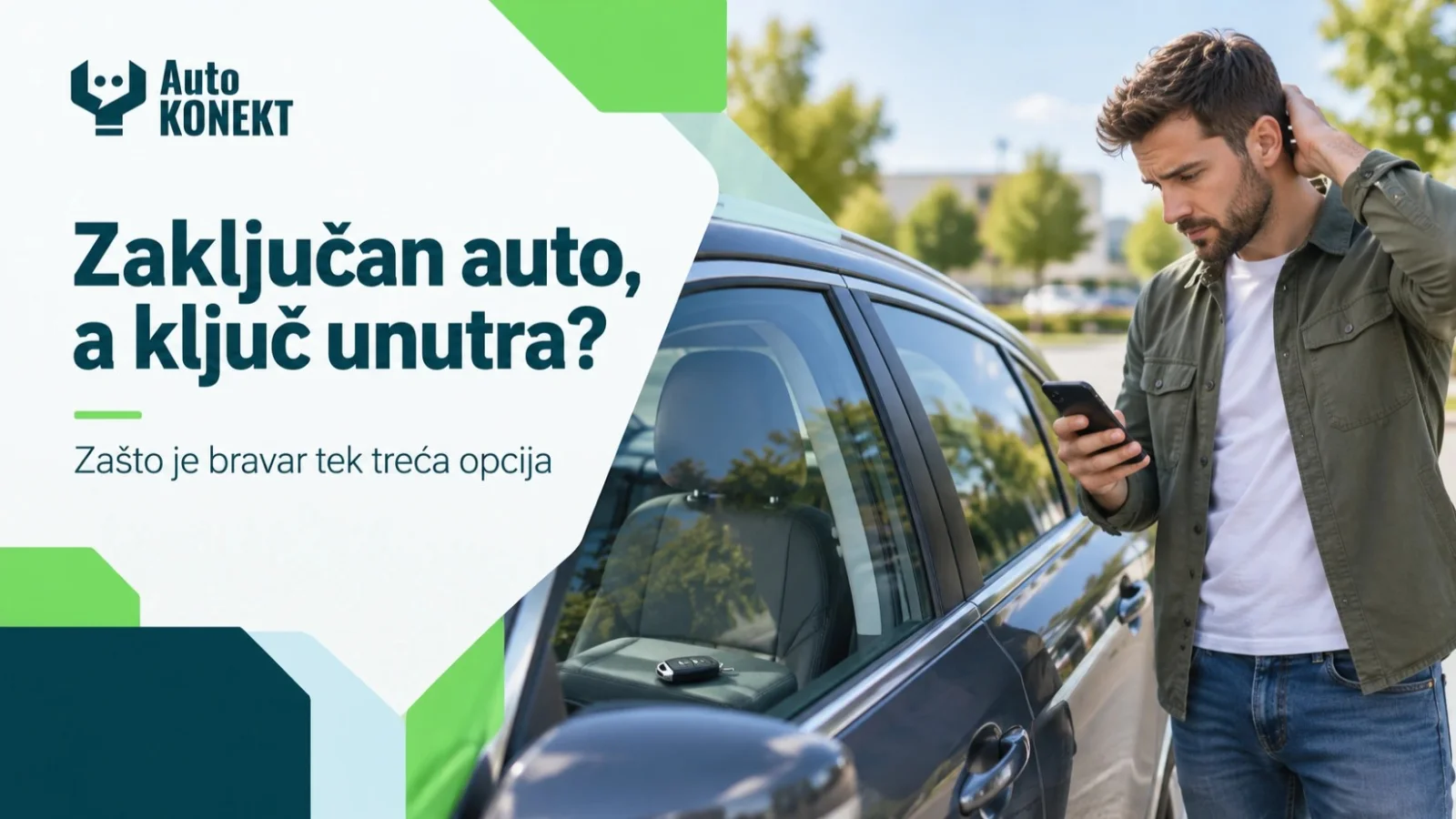
Locked Out of Your Car with the Key Inside: Why a Locksmith Is Only the Third Option
Almost everyone imagines this as a moment of distraction. In reality, with many modern cars, it is not the driver’s mistake at all — but a consequence of how today’s locking systems work. The car locks itself, the key remains on the seat or in the trunk, and you are left standing in the parking lot with your phone in your hand.
The first instinct is usually to call a locksmith. That is understandable, but in most cases it is neither the cheapest nor the fastest option. There are two or three steps worth trying first that drivers often skip simply because they do not know they exist.
This guide goes through the proper order: what to check first, when the situation stops being an inconvenience and becomes an emergency, and how to avoid spending more on solving the problem than the key itself is worth.
First Question: Is Anyone Still Inside the Vehicle?
Before anything else, answer this question. If a child, an elderly person, or a pet is inside the vehicle, this is no longer a problem with a key — it is an emergency, and the time calculation changes completely.
Why You Should Not Wait
A closed vehicle exposed to the sun behaves like a greenhouse. According to data from the U.S. National Weather Service, the temperature inside the cabin can rise by around 11°C in just ten minutes, and considerably more within an hour. Leaving a window slightly open makes virtually no difference.
An additional problem is that a child’s body heats up much faster than an adult’s. NHTSA states that a child’s body temperature rises three to five times faster than an adult’s, and heatstroke begins when body temperature reaches approximately 40°C.
That is why the thought of “I’ll be back in twenty minutes” is not acceptable in this situation.
Who Exactly Should You Call in Serbia?
Call 193 — the fire and rescue service. This is the number in Serbia that is actually used for this type of intervention, and commanders of the Belgrade Fire and Rescue Brigade have publicly praised parents who called 193 instead of attempting to break into the vehicle themselves.
One commonly repeated mistake found on many websites should also be corrected here: the single European emergency number 112 has not yet been fully implemented throughout the entire territory of Serbia.
Under the current Numbering Plan, the emergency service numbers are:
192 for police
193 for fire and rescue services
194 for emergency medical assistance
In this situation, 193 is the number to call.
Firefighters have equipment that often allows them to open the vehicle without causing any damage. If they determine that there is no time for that, they will break a window — and that is always the correct decision, because replacing a window is incomparably cheaper than the consequences of waiting.
What If I Break the Window Myself?
People are understandably concerned about the legal consequences, especially if the vehicle belongs to someone else.
Serbia’s Criminal Code recognizes the principle of necessity: when a danger to a person or property could not have been eliminated in another way, and the harm caused is not greater than the harm that was being prevented, unlawfulness is excluded.
In practice, this means that rescuing a child from an overheated vehicle is not treated in the same way as damaging someone else’s property.
Nevertheless, calling emergency services remains both the fastest and legally safest option. The call is recorded, and the emergency service’s assessment and documentation provide protection for you.
If you are already in a situation where you must act yourself, stay on the phone with the dispatcher while doing so.
If No One Is Inside the Vehicle: The First Five Minutes
When there is no immediate time pressure, the order is simple: start with the cheapest solution and move toward the more expensive ones.
1. Walk Around the Vehicle and Check Everything
It sounds obvious, but it works surprisingly often.
Check every door individually, including the rear doors you rarely use, and then check the trunk or tailgate.
On some vehicles, the central locking system may fail to lock every access point if one of the locks is worn or if one of the doors was slightly open at the moment the vehicle was locked.
On station wagons and SUVs, also check whether the trunk can be opened separately. On some models, the trunk has its own locking logic, independent of the doors.
2. Where Is the Spare Key — and Who Can Bring It?
Every vehicle is normally supplied with at least two keys.
Before calling anyone, calculate how long it would take someone from your home or office to bring the spare key.
In urban areas, this is very often faster than waiting for roadside assistance — and it costs nothing.
If you are travelling and the spare key is at home, it may still be worth checking whether same-day courier delivery is possible.
As a rule, this tends to cost less than a combination of emergency intervention and any potential damage to the vehicle.
3. The Manufacturer’s App — the Step Most Drivers Skip
This is one of the most underused solutions.
A large number of vehicles manufactured within the past ten years have a built-in communications module and a corresponding mobile application — Mercedes me, MyBMW, MyRenault, MyToyota, Volkswagen systems, and similar services.
Remote door unlocking is very often among the available functions.
If you activated the account when you took delivery of the vehicle, you may be able to unlock the doors from your phone in less than a minute, at no additional cost.
The problem is that many drivers never activate the service or simply forget that it exists.
A practical recommendation: check this now, before you actually need it.
Install the application for your vehicle, connect the car to your account, and remember where the remote unlock option is located.
It takes five minutes today and may save you an entire afternoon one day.
Why Does a Modern Car Lock Itself with the Key Inside?
With older vehicles, this was relatively difficult to do — the mechanical lock usually required the key to be outside the vehicle.
With modern locking systems, the situation is different, and it is useful to understand why.
Keyless Systems Work Based on Proximity, Not Intention
In keyless systems, the vehicle communicates with the key through antennas installed throughout the body of the vehicle.
If the key stops responding — because the battery is dead, because it is inside a metal container or bag in the trunk, or because it is outside the detection range — the vehicle behaves as though the key is not present.
From the system’s point of view, locking the vehicle is therefore perfectly “correct” behavior — it is simply not what you intended.
The Key Battery Can Die Without Much Warning
Most vehicle keys use lithium coin batteries such as CR2032 or CR2025.
They operate quietly and gradually lose capacity, so the driver may only notice the problem when the system stops responding.
Most vehicles display a warning on the instrument panel before this happens, but that warning is easy to overlook.
Automatic Relocking After a Certain Period
Many vehicles have an automatic relocking function.
If you unlock the car but do not open any door within approximately thirty seconds to one minute, the system automatically locks the vehicle again.
A similar principle applies to walk-away locking systems.
On many models these functions can be disabled through the vehicle settings, but very few drivers do so because they do not know the functions exist.
Your Key Probably Contains a Mechanical Key
This detail can save the day.
Many remote keys and key cards contain a small hidden mechanical key, usually released by pressing a small latch on the side.
That mechanical key can unlock the driver’s door even if the electronic system has completely stopped working.
On some models, the keyhole itself is hidden beneath a cover or behind the door handle, which is why many drivers do not even know it exists.
Check the owner’s manual and learn two things:
how to remove the mechanical key from the remote, and
where the mechanical door lock is located.
If your spare key is nearby, this is often the fastest way into the vehicle.
Roadside Assistance: A Service You May Already Be Paying For
Before calling someone and paying the first price you are quoted, check what services you already have.
In practice, there are three sources of assistance drivers regularly forget about.
The first is AMSS.
Its operations center is available 24 hours a day at 1987 and, in addition to repairs and towing, its roadside assistance services also include locksmith assistance and vehicle unlocking.
Exactly what is included free of charge depends on your membership package, so it is worth checking your coverage before you ever need it.
The second source is roadside assistance included with your insurance policy.
A large number of comprehensive insurance policies, as well as some compulsory motor liability insurance packages, include roadside assistance with a dedicated telephone number.
That number is usually printed on your insurance policy or on the assistance card supplied with it.
The third source is the manufacturer’s roadside assistance program.
Vehicles still within the warranty period generally have manufacturer mobility assistance included in the price of the vehicle.
The telephone number can normally be found in the service booklet or in the manufacturer’s application.
The point is simple: the exact same service may cost you nothing or a considerable amount of money, depending on which number you call first.
Find a Service Provider Before You Need One
On AutoKonekt, you can browse auto electricians and repair shops in your area, with contact details and available services all in one place — so you can save the number in your phone in advance instead of searching for it while standing in a parking lot.
Locksmith or Auto Electrician: When They Are the Right Choice
If the spare key is unavailable, the manufacturer’s application does not exist or does not work, and your roadside assistance does not cover vehicle unlocking, then a specialist service is the right solution.
What matters is knowing what to ask for and what questions to ask before the work begins.
What They Will Ask You For
A reputable service provider will ask for proof that the vehicle belongs to you before performing the intervention.
That may include the vehicle registration document, your personal identification, and potentially a contract or authorization if the vehicle is not registered in your name.
If nobody asks for proof of ownership, that is a warning sign rather than an advantage.
Ask About Potential Damage Before the Work Begins, Not Afterwards
Unlocking a modern vehicle is not a harmless procedure.
Potentially vulnerable areas include door seals, window regulator mechanisms, interior door trim, and sensors located inside the door itself.
On vehicles equipped with side airbags inside the doors, an unprofessional intervention can create a problem considerably more expensive than the unlocking itself.
Ask in advance:
what method will be used,
who covers the cost if any damage occurs, and
whether an invoice will be issued.
An invoice is not merely a formality. Without one, you have no proper basis for a complaint or a potential compensation claim.
If the Key Is Lost Rather Than Locked Inside
That is a different problem — and usually requires a different specialist.
Making a new key for a modern vehicle normally includes programming and pairing the key with the vehicle’s immobilizer.
This is performed by an auto electrician or an authorized service center with the appropriate diagnostic equipment.
For some brands, information must also be retrieved directly from the manufacturer’s database, which means ownership documentation will be required.
If you have lost your only key, expect the process to take more time.
And remember that making a spare key in advance is always cheaper than urgently replacing your only key after it has been lost.
What You Should Not Do
The internet is full of videos showing people opening vehicles using coat hangers, shoelaces, or improvised wedges.
It is important to be clear: those techniques generally apply to vehicles that are twenty years old or older and usually do not work on modern cars.
What they can do, however, is cause damage.
Forcing a wedge between the window and the door frame can deform the frame and damage the seal, after which the door may allow water and wind into the cabin.
Pulling wires or cables through the interior trim can damage the window regulator mechanism.
Vehicles with airbags installed in the doors can suffer even more serious damage.
Once everything is added up, repairing the damage caused by such attempts can cost several times more than a professional unlocking service.
Second, do not accept help from an unknown person who “happens” to be standing nearby in the parking lot and offers to unlock the vehicle.
A reputable service provider has a registered business name, contact information, and issues an invoice.
Third, and most importantly: everything described above applies exclusively to your own vehicle.
Attempting to open someone else’s vehicle without the owner’s consent can create serious legal problems, except in the emergency situation described earlier where someone’s life is in danger.
Five Habits That Can Eliminate This Problem
– Keep the spare key with a trusted person in the same city instead of storing it in the same house as the primary key. A magnetic key box hidden under the bumper is not a solution — it is an invitation to vehicle theft.
– Replace the battery in your key preventively, approximately every one to two years, instead of waiting for it to stop working. The cost of the battery is negligible compared with a single emergency intervention.
– Check the owner’s manual to learn where the mechanical key is hidden inside your remote and which door it unlocks. Try it once while you are at home and under no pressure.
– Keep the key in your pocket rather than inside a bag or backpack that you may place in the trunk. A large number of keyless locking incidents happen exactly this way.
– Activate the manufacturer’s mobile application for your vehicle and check whether it supports remote unlocking. If it does, you already have a solution in your pocket.
Vehicle Service in Your City
Auto electricians and repair shops organized by location, with the services they actually provide — including key programming and central locking repairs.
Conclusion
Being locked out of your car with the key inside may seem like a situation with no solution, but it almost never is.
The correct order is:
first check whether anyone is still inside the vehicle, then check all doors and the trunk, then try the spare key, then the manufacturer’s application, then the roadside assistance you may already be paying for — and only after that call a specialist unlocking service.
And the best time to check which of these options you actually have is not while standing in a parking lot on a hot day.
It is now.
Frequently Asked Questions
Who should I call if a child is locked inside a car?
Immediately call 193, the fire and rescue service.
They have equipment that usually allows them to open the vehicle without damage. If they determine there is no time to do so, they will break a window.
Do not call a locksmith first. In a closed vehicle exposed to sunlight, the cabin temperature can rise by around 11°C in ten minutes, while a child’s body temperature rises three to five times faster than an adult’s.
Does the 112 emergency number work in Serbia?
The single European emergency number 112 has not yet been fully implemented throughout the entire territory of Serbia.
In practice, the existing emergency service numbers are used:
192 for police
193 for fire and rescue services
194 for emergency medical assistance
Can a car be unlocked using a smartphone?
For a large number of vehicles manufactured within the past ten years, yes.
Manufacturer applications such as Mercedes me, MyBMW, MyRenault, and MyToyota commonly include remote door unlocking, provided that the user account has been activated and the vehicle has been connected to it.
The recommendation is to configure this in advance, before you actually need it.
Does AMSS unlock vehicles?
Vehicle unlocking is included among the roadside assistance services offered by AMSS.
The AMSS operations center is available 24 hours a day at 1987.
The extent of the service provided free of charge depends on your membership package, so it is best to check what your package includes before you need assistance.
Why does a car lock itself with the key inside?
Keyless systems detect the key using antennas installed throughout the vehicle body.
If the key battery is dead, the key is inside a bag in the trunk, or the key is otherwise outside the detection range, the vehicle may behave as though the key is not present.
In addition, many models have an automatic relocking function that locks the vehicle again if no door is opened within a short period after unlocking.
How much does it cost to unlock a car?
The price depends on the make and model of the vehicle, the time of day, and whether the service provider must travel to your location.
Before accepting the first offer, check three things that often cover the full cost:
your AMSS membership,
roadside assistance included with your insurance policy, and
manufacturer mobility assistance if the vehicle is still under warranty.
Can I break the window myself to rescue a child?
Serbia’s Criminal Code recognizes the principle of necessity, which excludes unlawfulness when a danger could not be eliminated in another way and the harm caused is not greater than the harm that was being prevented.
In practice, this means that saving a life is not treated in the same way as damaging property.
Nevertheless, calling 193 remains both the fastest and legally safest option, because the call is officially recorded and the emergency service’s assessment and documentation provide protection for you.