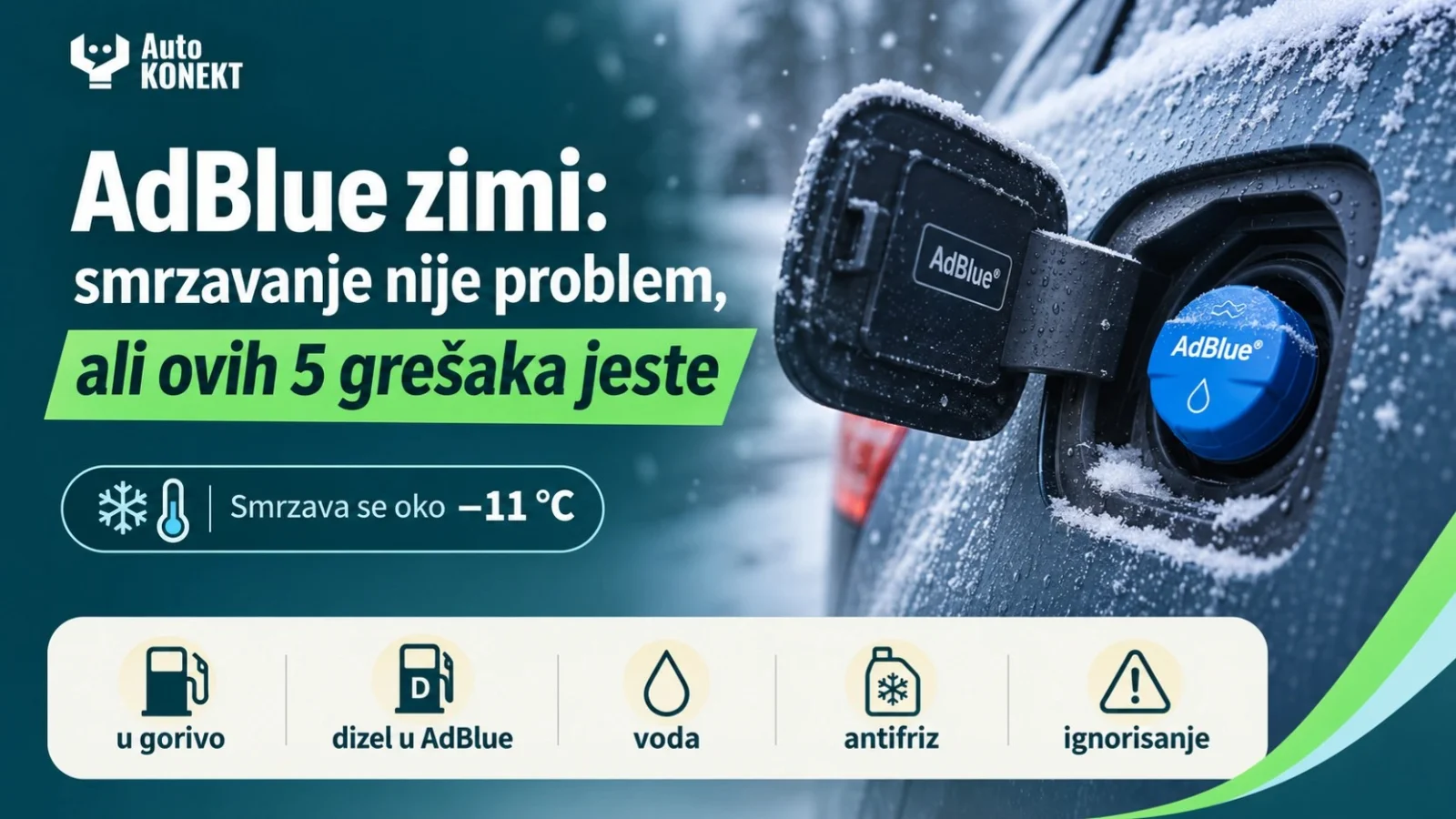
AdBlue in Winter: Freezing Isn't the Problem, but These 5 Mistakes Are
When you buy a diesel car, the salesperson will tell you everything about fuel consumption, equipment and service intervals. But they usually say nothing about AdBlue, apart from perhaps mentioning that “there's a blue cap next to the fuel filler”. So most drivers don't give AdBlue a second thought until an unfamiliar warning light appears on the dashboard—often in winter, when temperatures drop below zero and everything seems to work a little harder.
The good news is that frozen AdBlue doesn't deteriorate, and vehicles are designed to use it even in sub-zero temperatures. Expensive problems usually arise from well-intentioned attempts to help: adding water, trying to “protect” it from freezing, or pouring it into the wrong tank in a hurry. This guide explains what really happens to AdBlue in winter and how to avoid mistakes that can cost more than a tank of fuel.
What Is AdBlue and Which Cars Use It?
AdBlue is a clear, virtually odourless fluid: a solution of 32.5% urea in demineralised water, produced in accordance with ISO 22241. It is not a fuel or a fuel additive. It goes into a separate tank, and the system automatically injects it into the exhaust, where the SCR catalyst helps convert harmful nitrogen oxides into nitrogen and water vapour.
It is used mainly in diesel cars and vans that meet the Euro 6 emissions standard, generally from around 2015 onwards, although not all of them use it. The safest approach is to check the owner's manual or look for a blue cap marked AdBlue. In newer models, the filler is most often next to the fuel filler, but on some vehicles it is in the boot or under the bonnet.
What Happens to AdBlue Below Freezing?
AdBlue starts to freeze at around −11 °C. That may sound worrying, but manufacturers have planned for it: vehicles with an AdBlue system have heaters in the tank and lines, which thaw enough fluid after the engine starts for the system to operate normally.
Most importantly, freezing does not damage the AdBlue itself. Once it thaws, it can be used without any loss of quality, so there is no need to drain or replace it.
That doesn't mean the system is completely immune to problems. AdBlue consists mostly of water and expands when it freezes, so an overfilled tank can be damaged. That's why you should never overfill the tank, especially before severe frosts.
There are a few other things worth knowing during very cold weather:
The AdBlue level display may take time to update until the heater has thawed enough fluid, so don't rely on it during the first few minutes of driving.
On some models, a temporary warning related to the SCR system may appear after the vehicle has been parked for a long time at temperatures below approximately −15 °C. The correct procedure depends on the vehicle, so check the manufacturer's manual.
When topping up in extreme cold, the system may not recognise the refill immediately. If possible, top up before a cold spell, or leave the vehicle in a warmer place for a few hours before refilling.
How to Top Up AdBlue Correctly
Topping up is straightforward, but a few details can determine whether the system recognises that you've refilled it:
1. Park on level ground and switch off the ignition. If the ignition remains on, the warning may stay on the display even after topping up.
2. Use AdBlue from an original, sealed container, marked AdBlue or ISO 22241, and check that it is within its expiry date.
3. Add the amount specified in the manual or on the display. Many models require at least around 5 litres for the refill to be recognised, while some vans may require as much as 10 litres. Adding “just a little, to be on the safe side” may not clear the warning.
4. Do not overfill the tank. Use a dedicated filling nozzle and follow the maximum quantity stated in the vehicle's manual. With containers that have an automatic flow-stop mechanism, filling stops when the intended level is reached. Don't shake or tilt the container to squeeze in “just a little more”.
5. Rinse off any spilled AdBlue with water immediately. Once it dries, it leaves white crystals and can damage paintwork and metal components.
You may notice a faint smell of ammonia when opening the cap. This is normal and doesn't necessarily mean that anything is wrong with the fluid.
Five Costly Mistakes to Avoid
1. Pouring AdBlue into the Fuel Tank
This is the most expensive mistake, and it's easier to make than you might think: the filler openings are next to each other, and AdBlue containers can look similar to fuel cans. AdBlue in the fuel can seriously damage the fuel pump, filter and injection system.
If this happens, do not start the engine or switch on the ignition. In many vehicles, simply switching on the ignition activates the fuel pump. The vehicle should be towed to a workshop, where the tank can be drained and cleaned. If the engine hasn't been started, the damage is generally limited to cleaning the system and adding fresh fuel.
2. Putting Diesel or Oil into the AdBlue Tank
The reverse mistake is less common, but it can also be expensive. Even a small amount of diesel can contaminate a much larger quantity of AdBlue and damage the pump, dosing valve and catalyst. The procedure is the same: don't start the engine, and take the vehicle to a workshop to have the tank drained and flushed.
3. Using Water Instead of AdBlue
When AdBlue is running low and the dashboard countdown has started, it can be tempting to add a little water “just to make it to the next petrol station”. Tap water contains minerals that can build up in the system and cause damage. The system also monitors fluid quality and may report a fault or prevent the engine from restarting. AdBlue is indeed about two-thirds water, but it's demineralised water mixed with urea in a precisely defined ratio.
4. Adding Antifreeze or an Additive “to Stop It Freezing”
The logic seems reasonable: if something freezes, add something to prevent it. But that's the wrong approach with AdBlue. Vehicle manufacturers allow only pure AdBlue that meets ISO 22241; any additive is a contaminant as far as the system is concerned. Freezing is handled by the vehicle's heater, not by an additive.
5. Ignoring the Countdown
When the AdBlue level gets low, the vehicle first issues a warning and then starts displaying how many kilometres remain before restarting is disabled. This isn't merely a recommendation; it's a restriction required by emissions regulations. Once the counter reaches zero, an engine that has been switched off will not restart until AdBlue is added. In some vehicles, particularly vans, engine power or vehicle speed may also be limited beforehand.
Important: A countdown does not always mean that the vehicle is low on AdBlue. Some vehicles activate the same mechanism when they detect an SCR system fault, even when there is enough fluid in the tank. If the display reports an emissions-control system fault, topping up alone probably won't solve the problem, and diagnostics will be needed.
This is particularly inconvenient in winter—nobody wants to be stranded in a car park in freezing temperatures. Warnings usually appear well in advance, but it's best to top up AdBlue as soon as they do.
AdBlue Warning Light Won't Go Off?
If topping up doesn't help, or the display reports a system fault, find a workshop in your city on AutoKonekt and book a diagnostic check before the countdown reaches zero.
Find a workshop on autokonekt.rs →
Where and How to Store AdBlue
An AdBlue container isn't something you should leave in the boot all year round. Urea breaks down faster in heat, so AdBlue left in a hot boot throughout the summer may lose quality before its expiry date. Manufacturers recommend storing it in its original, sealed container, away from direct sunlight, ideally at temperatures no higher than 25 °C. Freezing at around −11 °C does not harm the fluid, but heat shortens its shelf life. The expiry date depends on the manufacturer and storage conditions, so follow the date shown on the packaging.
In practice, buy AdBlue when you need it or shortly before winter. Store it in a garage or cellar rather than in the vehicle, and check the expiry date before use.
When the Warning Light Stays On After Topping Up
If you've added the correct amount of AdBlue and the warning remains after following the manufacturer's prescribed procedure, there may be a problem with the level or quality sensor, NOx sensor, AdBlue pump, heater, dosing valve or another component of the SCR system. Urea crystals can also block the lines. First, rule out simpler causes: too little fluid added, or a delay in the system recognising the refill, especially in very cold weather.
Some vehicles need to be driven for a short distance so that the system can check the level again, meaning the warning may not disappear immediately. If it remains afterwards, or if a system-fault message and countdown appear, have the vehicle diagnosed as soon as possible. The sooner a fault is identified, the lower the risk of being left unable to restart the engine.
A Workshop Near You
Browse AutoKonekt partner workshops on the map and choose the nearest one for an AdBlue system check or a complete winter vehicle inspection.
Frequently Asked Questions
How Much AdBlue Does a Car Use?
It depends on the engine and driving conditions. In passenger cars, consumption is most often between less than one litre and around two litres per 1,000 km, and it increases under heavier loads, when towing a trailer or with aggressive driving. In many vehicles, one tank won't last until the next scheduled service, so topping up between services is normal.
Does Frozen AdBlue Need to Be Replaced?
No. Once it thaws, AdBlue retains its quality and can be used normally. The vehicle's heater thaws it while you drive.
How Far Can I Drive When the AdBlue Warning Light Comes On?
It depends on the vehicle. The first warning usually appears when there is enough fluid left for anything from a few hundred to several thousand kilometres, and the display shows the remaining range. Don't wait until the countdown reaches zero: after that, the engine will not restart until you add AdBlue.
Where Can I Buy AdBlue?
At petrol stations, car-parts shops and workshops, most commonly in containers with a filling spout. Some stations also have AdBlue pumps, but the nozzle doesn't fit every car's filler opening, so check the owner's manual.
Is AdBlue Dangerous?
AdBlue is not classified as a hazardous substance under normal handling conditions, but you should avoid getting it in your eyes or swallowing it. If it gets into your eyes, rinse thoroughly with water and seek medical advice. Wash it off your skin and the car's bodywork with water, as it can damage paintwork and certain metals. Keep it out of reach of children.