
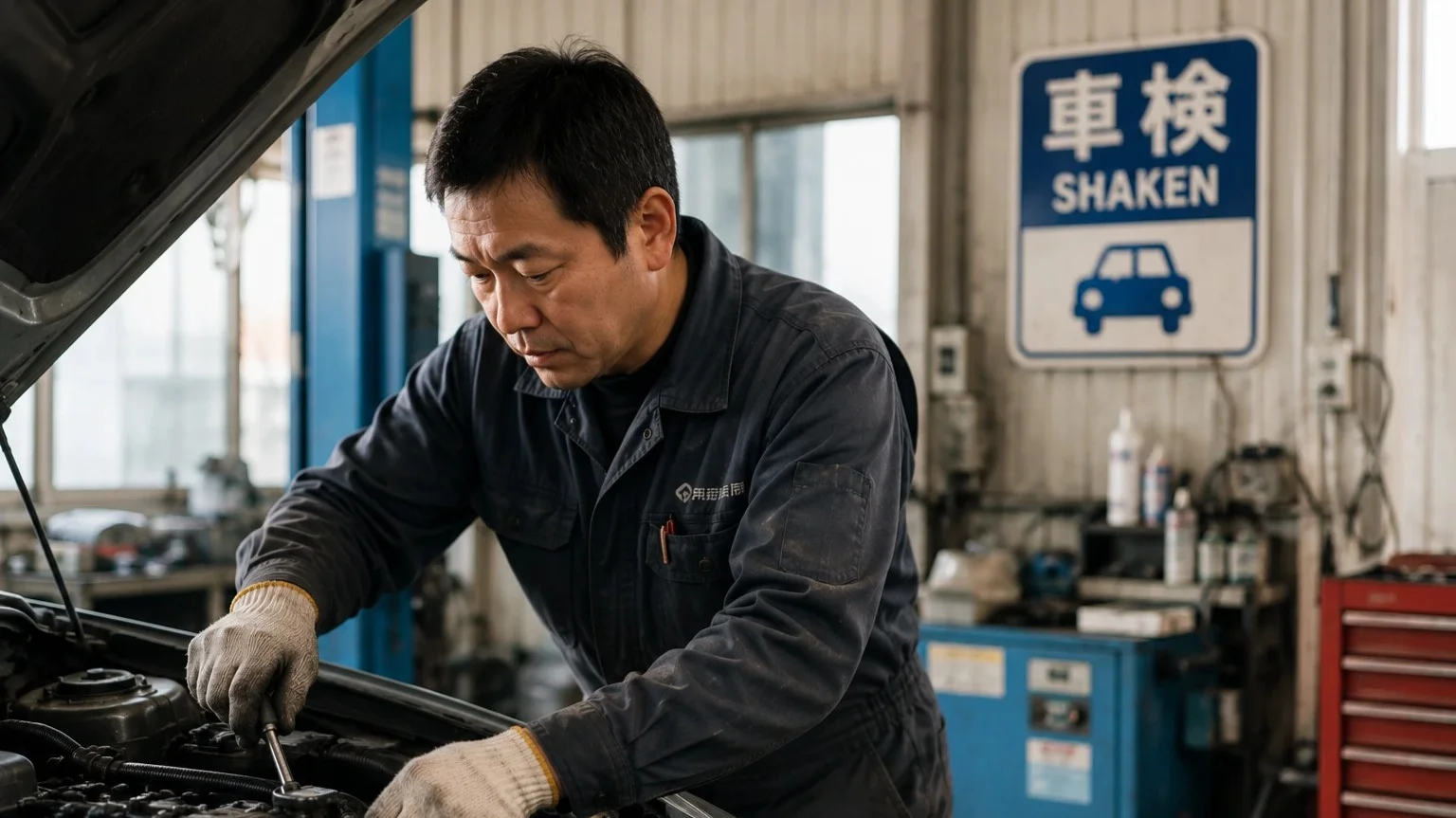
Why Do Cars Last Twice as Long in Japan — and What Can a Driver in Serbia Learn from It?
There is one fact that completely changes the way we think about taking care of a car. In Japan, it is perfectly normal for a vehicle to exceed 480,000 kilometers (300,000 miles), and these are not rare exceptions—they are ordinary cars driven by ordinary people. The secret is not that Japanese cars are made from some special metal. The secret lies in a system that encourages drivers to think ahead about vehicle maintenance instead of waiting until something breaks down.
That system is called Shaken (車検), and it contains a lesson that can be directly applied by every driver in Serbia.
What Is Shaken and Why Is It So Strict?
Shaken is Japan’s mandatory vehicle inspection system, introduced by law in 1951. Unlike in many countries where technical inspections are often viewed as a routine formality, Shaken is known as one of the most thorough vehicle inspection programs in the world.
The logic is simple but uncompromising. A new vehicle undergoes its first inspection three years after purchase and then every two years thereafter. Inspectors carefully examine the braking system, steering, lighting, emissions, and the structural integrity of the vehicle—all according to precise government specifications, with little tolerance for defects. Suspension components must be free of significant corrosion, all systems must function properly, and vehicles older than ten years are subject to stricter emissions and other requirements.
What makes Shaken unique is not only the inspection checklist but also its cost and consequences. A typical inspection at an authorized service center costs between 100,000 and 200,000 yen, approximately $800 to over $1,600. This amount includes mandatory insurance, vehicle weight tax, and—most importantly—any repairs required for the vehicle to pass the inspection.
How Preventive Maintenance Extends Vehicle Life
Here is why this matters when it comes to vehicle maintenance.
When you know that a serious, expensive, and strict inspection awaits you every two years, you do not wait for something to break. Instead, you maintain your vehicle continuously throughout the entire period to avoid unpleasant surprises and major expenses. This is precisely the effect that Shaken has on a nationwide scale.
Japanese drivers do not achieve high mileage by accident. They do so through careful driving habits and proactive maintenance practices: properly warming up the engine, regularly replacing fluids, and keeping detailed service records. According to automotive experts, the key difference is not the car itself—it is the mindset that values consistent care and long-term reliability.
The result is a culture in which maintenance is not viewed as an expense but as a normal part of vehicle ownership. This is one reason why used Japanese vehicles are known worldwide for their excellent condition. Regular servicing, complete maintenance records, and non-aggressive driving habits help keep them in outstanding shape for many years.
What Does This Mean for Drivers in Serbia?
Now we come to the main point.
You may be thinking: “That sounds great, but I don’t have a Shaken inspection that costs €1,500 every two years.”
And that is true—but it is also exactly the point.
In Serbia, vehicle inspections are mandatory and conducted annually. However, for many drivers, they remain a formality that does not significantly influence maintenance habits. Without a system that forces long-term thinking, it is easy to fall into a reactive approach: drive until something starts squeaking, knocking, leaking, or completely fails—and only then look for a repair shop. The reactive approach is almost always more expensive than the preventive one.
Breakdowns never happen at a convenient time. Ignored brake pads damage brake discs. Neglected coolant can lead to engine overheating. A timing belt that is not replaced on schedule can destroy an entire engine. Each of these failures costs many times more than the routine inspection that could have prevented it.
The Japanese lesson is not “introduce expensive inspections.” The lesson is: treat prevention as a habit, not as a reaction. Japanese drivers do not wait for their vehicles to fail—and that is why their cars often last twice as long.
How to Turn Prevention into a Habit—Without a Shaken System
The good news is that you do not need a law forcing you to be proactive. That is exactly why digital platforms are emerging to help drivers plan vehicle maintenance on time. In this way, a practical system can be created that helps you focus on the right things at the right moment.
Keep Simple Records
Write down when you last changed your oil, brake pads, fluids, and filters—and at what mileage. Japanese drivers have been doing this for decades, and it is half the secret.
Link Inspections to the Seasons
Before winter: check the battery, antifreeze, tires, and wiper blades.
Before summer: inspect the air conditioning system, cooling system, and tire pressure.
Two fixed maintenance checks per year can eliminate most common risks.
Respond to the First Warning Sign
An unusual noise, vibration, or dashboard warning light is a signal. The cheapest time to fix a problem is before it becomes a major repair.
Choose a Trusted Service Partner in Advance
The worst time to look for a repair shop is when you urgently need one and have no options. It is far better to have a reliable service provider you can trust before problems arise.
That is exactly why AutoKonekt was designed as a preventive maintenance platform—to connect drivers with trusted repair shops before a breakdown occurs, not after they find themselves stranded on the roadside. The goal is not to repair expensive failures faster, but to help drivers avoid them altogether.
Japan needed a strict government system to achieve this. You only need to make preventive maintenance simple—and that is something you can start doing today.
Frequently Asked Questions
How Often Should a Vehicle Be Inspected to Remain Reliable?
Legally, once a year in Serbia. However, reliability is not built during the inspection itself—it is built through regular checks throughout the year. The Japanese example shows that continuous maintenance between inspections has the greatest impact on vehicle longevity.
Does Preventive Maintenance Really Save Money?
Yes, in the vast majority of cases. The cost of regular inspections and minor replacements is almost always significantly lower than repairing a major failure caused by neglect. Reactive maintenance is expensive maintenance.
Why Are Used Japanese Cars Considered So Well Preserved?
Because of the combination of strict Shaken inspections, a culture of regular servicing, careful driving habits, and complete service histories. Many owners even sell their vehicles before a major inspection is due, which means the market is constantly supplied with well-maintained used cars.
How Do I Know What Inspections My Vehicle Needs and When?
The easiest approach is to base maintenance on mileage and seasonal checks while relying on a trusted service provider that keeps track of your vehicle’s history. AutoKonekt helps you find such a partner and turn maintenance into a habit instead of an emergency response when something breaks down.
The Shaken costs mentioned above are approximate figures based on common practices in Japan and are provided solely to illustrate the Japanese vehicle maintenance system.