
Original or replacement auto glass: when is the difference only in price, and when is it a matter of safety?
Drivers often choose auto glass based on price, because at first glance all glass looks the same. But in modern cars, the windshield is no longer just a piece of glass — cameras, sensors, HUD systems, heating elements, antennas and driver assistance systems all operate through it. The difference between a good and a poor choice is often invisible to the naked eye, but it can be felt the first time a driver assistance system reacts incorrectly.
1. What do original, OES/OEE and aftermarket glass mean?
Non-original does not automatically mean bad. There are reputable manufacturers that produce glass both for original equipment installation (OEM) and replacement glass of the same quality (OES/OEE), made according to the same specifications as the factory-fitted part. The real problem is not the aftermarket category itself, but the cheapest “no-name” option with no clear documentation proving compatibility with the specific vehicle model and equipment level.
2. Homologation is the minimum, not a guarantee of identical quality
Auto glass must meet homologation standards in order to be legally installed. But the standard guarantees only basic safety — it does not guarantee that the replacement glass has the same acoustic layers, the same optical zone for the camera, the same HUD properties or identical sensor brackets as the original. Two homologated pieces of glass can still be technically different in details that affect the operation of the vehicle’s electronics.
3. Why ADAS changes the whole story
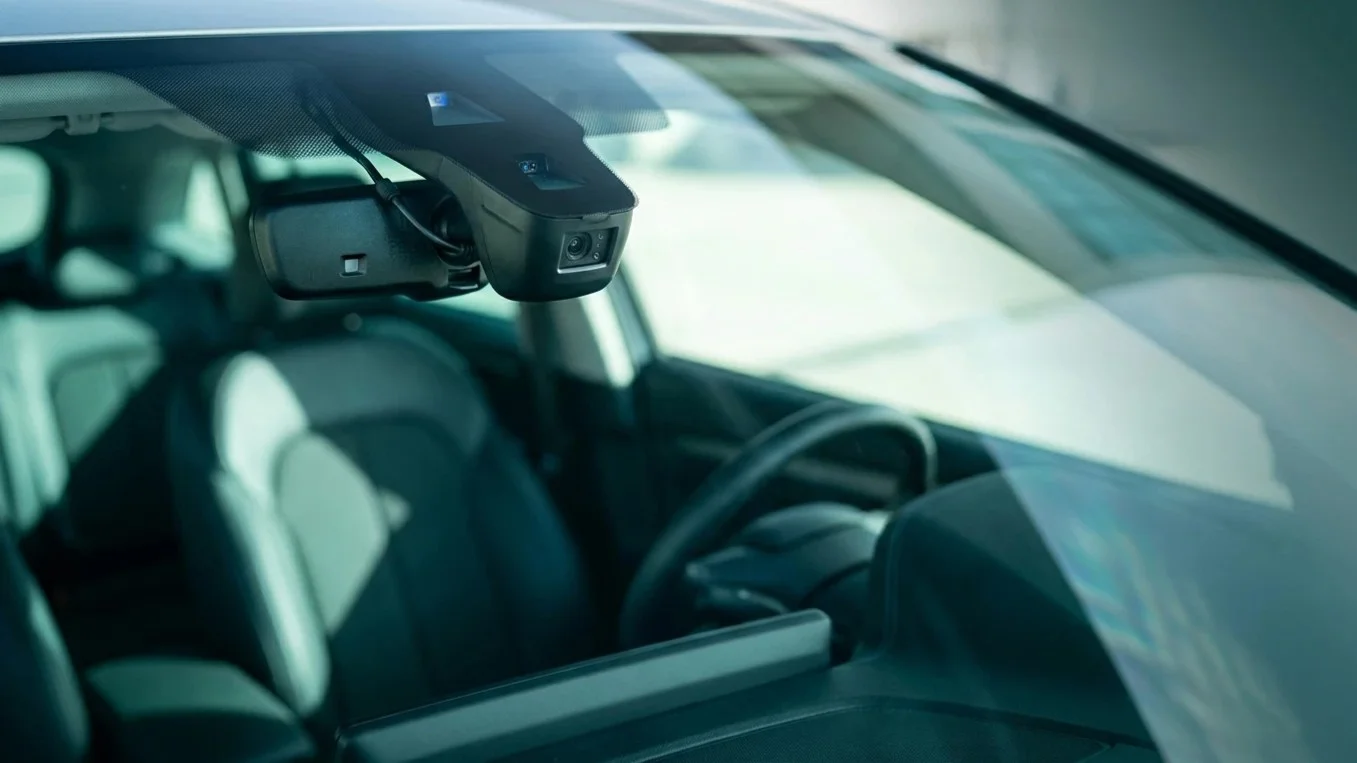
In vehicles with a camera behind the windshield, even a small difference in the angle of the bracket, optical distortion or the exact position of the glass can directly affect the operation of lane assist, automatic emergency braking, adaptive cruise control and traffic sign recognition. A system calibrated for one geometric position will not work with the same precision if the new glass is even a few millimetres differently positioned.
Signs that something is not right after replacement
After replacing the windshield, it is worth paying attention to signs that calibration may not have been performed or may not have been successful:
Dashboard warnings, such as ADAS, lane assist or camera alerts, that appear for no clear reason or do not turn off
Lane assist pulls the steering wheel out of the lane or reacts too late
Adaptive cruise control maintains distance incorrectly or brakes abruptly
The HUD display is shifted, blurred or duplicated
The rain or light sensor reacts with a delay or does not react at all
If you notice any of these symptoms after replacing the windshield, this is not something that will “settle on its own” — the system should be checked by a service centre equipped for ADAS calibration.
4. Why a cheap replacement can sometimes be the most expensive option
If a windshield replacement offer does not include calibration, high-quality adhesive, the required curing time and a documented work procedure, then the price is incomplete. Saving money on the glass itself can easily turn into an additional cost for calibration, fixing leaks or, in the worst case, a driver assistance system that does not work reliably when it is needed most.
5. When aftermarket glass makes sense
For older vehicles without ADAS, HUD or special glass functions, high-quality homologated glass from a known manufacturer can be a perfectly rational and economically justified choice. In such cases, the difference between original and replacement glass is, to a large extent, mostly a matter of price.
6. When you should not cut costs
In vehicles equipped with an ADAS camera, HUD, heated windshield, acoustic layer, rain or light sensors, panoramic glass or specially curved glass, the difference is no longer merely aesthetic or financial — it directly affects driving safety.
Practical checklist for the reader
Before replacing your windshield, always ask the service centre:
Is the glass homologated and does it have the appropriate marking?
Who is the manufacturer of the glass?
Is the glass intended specifically for that VIN, model and equipment level?
Does it support the ADAS camera, HUD, heating, rain sensor and acoustic layer, if the vehicle has them?
Does the price include calibration?
Will I receive a written report confirming that calibration has been performed?
Which adhesive is used and what is the minimum safe drive-away time?
Is there a warranty against leaks, wind noise and installation defects?
It is not simply a question of original or non-original
The real question is: is the glass suitable for that specific vehicle, has it been installed correctly and have all systems been checked and calibrated after replacement? This is a professional and useful way to look at the topic for drivers, and it naturally leads to one simple message — for this type of work, you should choose a trusted service centre, not just the lowest price.
Looking for a service centre that does this properly? On the AutoKonekt platform, you can find auto service providers offering auto glass services with ADAS calibration and system checks after replacement — without guesswork or calling around.